
Click on the button below to go to the offer of this German-speaking host.
County: Constanta
Website: poeme-mamaia.com
Telefon: +40 (0)721 255 050
Address: BULEVARDUL MAMAIA NR.477A, Constanta, Romania

Our UiR database: What you can also visit and explore nearby ...
Constanta | The old Casino
(17 October 2026)
X

(17 October 2026)
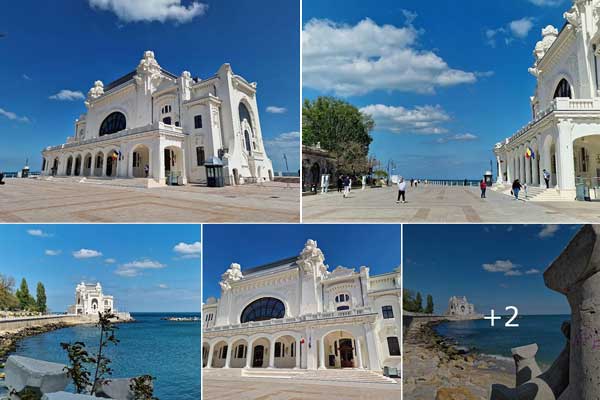
Pictures from May 13, 2026, of the newly renovated Old Casino, located directly on the Black Sea in Constanta 🥰
The building was first constructed as a wooden structure in 1880. In 1910, the casino was rebuilt in the Art Nouveau style according to the plans of architect Daniel Renard. It is regarded as Romania's most famous Art Nouveau building and is the landmark of the city of Constanta.
The building was first constructed as a wooden structure in 1880. In 1910, the casino was rebuilt in the Art Nouveau style according to the plans of architect Daniel Renard. It is regarded as Romania's most famous Art Nouveau building and is the landmark of the city of Constanta.
Cluj-Napoca | A city that never sleeps (Part 1 of 2)
(13 October 2026)
X
(13 October 2026)
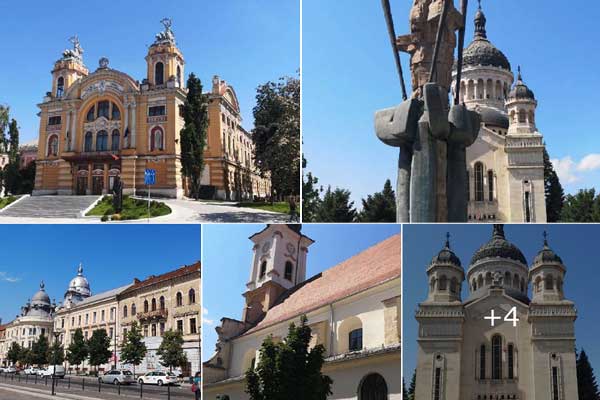
Cluj-Napoca (German: Klausenburg, Hungarian: Kolozsvár) in summer, (probably*) the second largest city in Romania and the capital of Cluj County in Transylvania.
Cluj-Napoca, with about 400,000* inhabitants, is considered the unofficial capital of the Transylvania region. The city has universities, a vibrant nightlife, and many buildings from the times of Hungarian and Saxon rule. Around the main square, Piata Unirii, are the Gothic St. Michael’s Church and an equestrian statue of King Matthias Corvinus, who lived in the 15th century. The baroque Banffy Palace is now a museum displaying Romanian art.
Cluj-Napoca has an international airport and is located in the northwest of Romania.
We thank Mr. Frank Schleßmann for sending these beautiful pictures (photos from summer 2023) and for granting permission to use them.
* It could also be Iasi, Timisoara or Constanta. Unfortunately, there are no exact figures.
Cluj-Napoca, with about 400,000* inhabitants, is considered the unofficial capital of the Transylvania region. The city has universities, a vibrant nightlife, and many buildings from the times of Hungarian and Saxon rule. Around the main square, Piata Unirii, are the Gothic St. Michael’s Church and an equestrian statue of King Matthias Corvinus, who lived in the 15th century. The baroque Banffy Palace is now a museum displaying Romanian art.
Cluj-Napoca has an international airport and is located in the northwest of Romania.
We thank Mr. Frank Schleßmann for sending these beautiful pictures (photos from summer 2023) and for granting permission to use them.
* It could also be Iasi, Timisoara or Constanta. Unfortunately, there are no exact figures.
Cluj-Napoca | A city that never sleeps (Part 2 of 2)
(13 October 2026)
X
(13 October 2026)
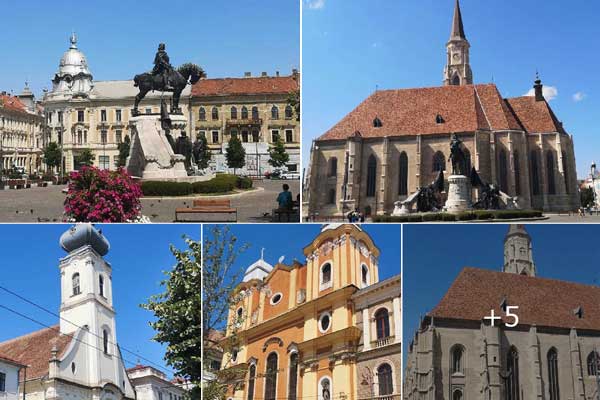
Cluj-Napoca (German: Klausenburg, Hungarian: Kolozsvár) in summer, (probably*) the second largest city in Romania and the capital of Cluj County in Transylvania.
Cluj-Napoca, with about 400,000* inhabitants, is considered the unofficial capital of the Transylvania region. The city has universities, a vibrant nightlife, and many buildings from the times of Hungarian and Saxon rule. Around the main square, Piata Unirii, are the Gothic St. Michael’s Church and an equestrian statue of King Matthias Corvinus, who lived in the 15th century. The baroque Banffy Palace is now a museum displaying Romanian art.
Cluj-Napoca has an international airport and is located in the northwest of Romania.
We thank Mr. Frank Schleßmann for sending these beautiful pictures (photos from summer 2023) and for granting permission to use them.
* It could also be Iasi, Timisoara or Constanta. Unfortunately, there are no exact figures.
Cluj-Napoca, with about 400,000* inhabitants, is considered the unofficial capital of the Transylvania region. The city has universities, a vibrant nightlife, and many buildings from the times of Hungarian and Saxon rule. Around the main square, Piata Unirii, are the Gothic St. Michael’s Church and an equestrian statue of King Matthias Corvinus, who lived in the 15th century. The baroque Banffy Palace is now a museum displaying Romanian art.
Cluj-Napoca has an international airport and is located in the northwest of Romania.
We thank Mr. Frank Schleßmann for sending these beautiful pictures (photos from summer 2023) and for granting permission to use them.
* It could also be Iasi, Timisoara or Constanta. Unfortunately, there are no exact figures.
Constanța... on the Black Sea
(09 October 2026)
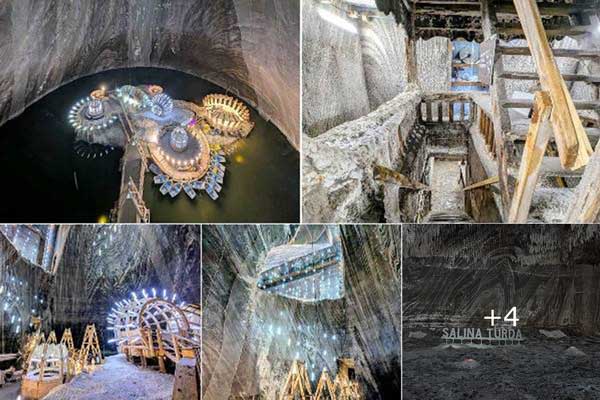
Salt mine / Salina Turda | Cluj County
(27 September 2026)
X
(27 September 2026)
The Turda Salt Mine is a true museum of the history of salt mining.
It is located in the town of Turda, which is situated in Cluj County. The temperature in the salt mine remains constant at 10–12 °C. It is one of the oldest and best-known salt mines in Transylvania / Romania.
Beautiful pictures by Mr. Iercosan Marian from a few days ago (end of September 2025). Thank you for these 🥰
It is located in the town of Turda, which is situated in Cluj County. The temperature in the salt mine remains constant at 10–12 °C. It is one of the oldest and best-known salt mines in Transylvania / Romania.
Beautiful pictures by Mr. Iercosan Marian from a few days ago (end of September 2025). Thank you for these 🥰
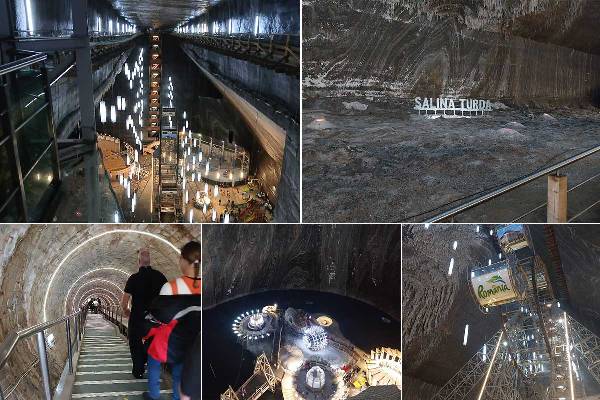
Turda Salt Mine | Cluj County
(12 September 2026)
X
(12 September 2026)
The Turda Salt Mine is a true museum of the history of salt mining. It is located in the town of Turda, in Cluj County. The temperature in the salt mine remains constant at around 10–12 °C. It is one of the oldest and best‑known salt mines in Transylvania / Romania.
More salt mines and info in Romania:
https://willkommen-in-rumänien.de/#Salzbergwerke
We thank Mr. Andreas Hainbach for these beautiful pictures from his Romania tour at the end of July 2025 / beginning of August 2025. Many thanks 🥰
More salt mines and info in Romania:
https://willkommen-in-rumänien.de/#Salzbergwerke
We thank Mr. Andreas Hainbach for these beautiful pictures from his Romania tour at the end of July 2025 / beginning of August 2025. Many thanks 🥰
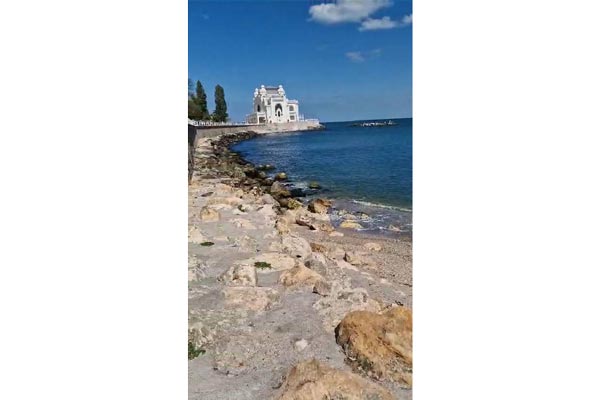
Constanța / Konstanza on the Black Sea
(28 August 2026)
X
(28 August 2026)
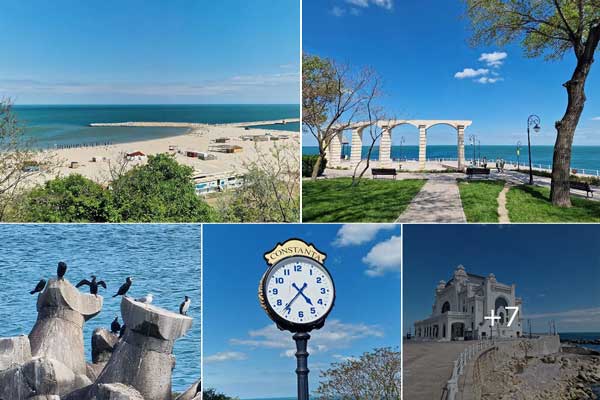
Constanța... on the Black Sea
(28 August 2026)
X
(28 August 2026)
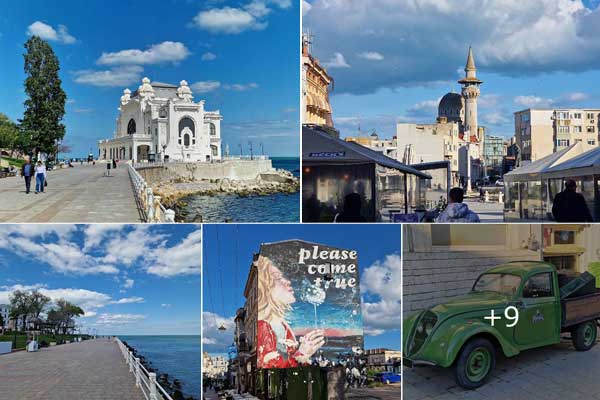
Constanța (Konstanza in German) is not only home to the recently renovated “Old Casino”; it also offers an opera house, museums, the Great Mosque, the House with Lions, the marina, many cafés and restaurants, and the Black Sea.
Pictures from May 13, 2026.
Constanța has a history spanning more than 2,000 years, documented in the National Museum of History and Archaeology. The nearby Mosaic Museum displays Roman floor mosaics from the 4th century AD. The Carol I Mosque is also located nearby; its floor is covered with a huge Persian carpet, and its minaret rises high above the city.
Pictures from May 13, 2026.
Constanța has a history spanning more than 2,000 years, documented in the National Museum of History and Archaeology. The nearby Mosaic Museum displays Roman floor mosaics from the 4th century AD. The Carol I Mosque is also located nearby; its floor is covered with a huge Persian carpet, and its minaret rises high above the city.
Constanta | The old Casino
(22 August 2026)
X
(22 August 2026)
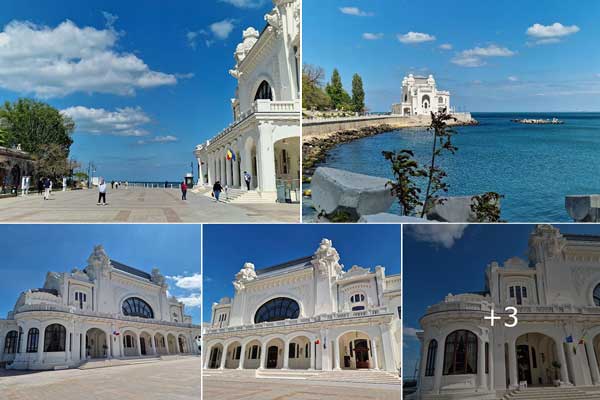
Pictures from May 13, 2026, of the newly renovated Old Casino, located directly on the Black Sea in Constanta 🥰
The building was first constructed as a wooden structure in 1880. In 1910, the casino was rebuilt in the Art Nouveau style according to the plans of architect Daniel Renard. It is regarded as Romania's most famous Art Nouveau building and is the landmark of the city of Constanta.
The building was first constructed as a wooden structure in 1880. In 1910, the casino was rebuilt in the Art Nouveau style according to the plans of architect Daniel Renard. It is regarded as Romania's most famous Art Nouveau building and is the landmark of the city of Constanta.
Time for sea and more | Constanta | Black Sea
(08 August 2026)
X
(08 August 2026)
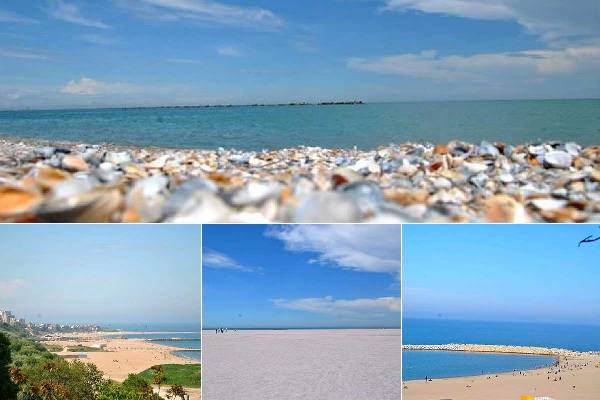
Pictures from the beach in Constanta and the Black Sea, Mamaia, and the many beaches and places in the surrounding area.
https://urlaub-in-rumänien.de | https://willkommen-in-rumänien.de
https://urlaub-in-rumänien.de | https://willkommen-in-rumänien.de
Mamaia Nord | Constanța | Sunset
(30 July 2026)
Constanta ... at the Black Sea
(29 July 2026)
X
(29 July 2026)
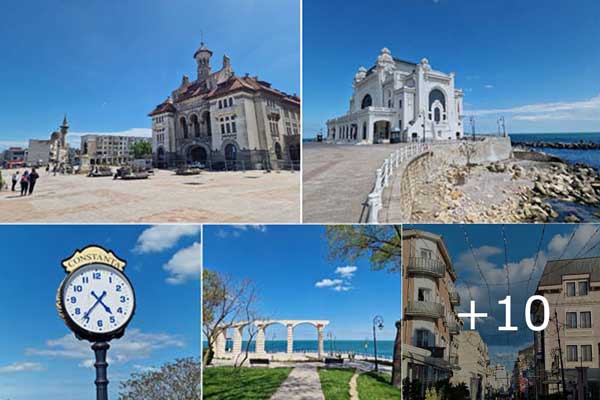
Constanta (German: Konstanza) is not just the old Casino, now newly renovated — it also offers the Opera, museums, the Great Mosque, the House with Lions, the marina, many cafés and restaurants, and the Black Sea.
Current pictures from May 13, 2026.
Constanta has a history of over 2,000 years, documented in the National Museum of History and Archaeology. In the adjacent Mosaic Museum, you can see Roman floor mosaics from the 4th century AD. Nearby is also the Carol I Mosque, laid out with a huge Persian carpet, and its minaret rises high above the city.
Current pictures from May 13, 2026.
Constanta has a history of over 2,000 years, documented in the National Museum of History and Archaeology. In the adjacent Mosaic Museum, you can see Roman floor mosaics from the 4th century AD. Nearby is also the Carol I Mosque, laid out with a huge Persian carpet, and its minaret rises high above the city.
Cap Midia Beach | The Black Sea
(28 July 2026)
X
(28 July 2026)
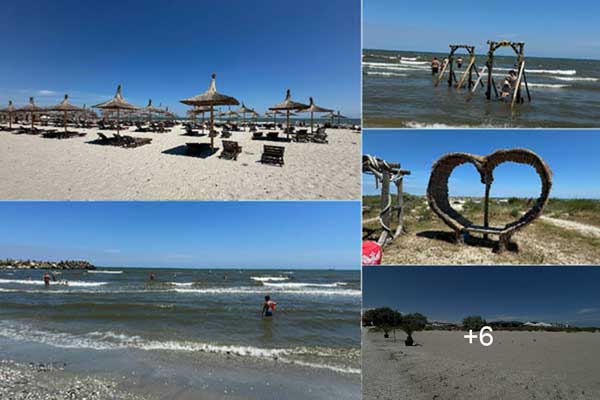
Pictures from Cap Midia beach, one of the quieter beaches on the Romanian Black Sea coast. It is located north of Navodari towards Cape Midia, approximately 25 km north of Constanta (and also north of Mamaia), and stands out clearly from the lively beaches in Mamaia.
The beach is mainly visited by locals and is usually much less crowded than other beaches in the region. Loud beach music and large beach clubs are rarely, if ever, found here.
The sea is shallow for a long distance, making the beach well-suited for families with children. The beach consists predominantly of light-colored, soft sand and is considered clean.
There are a few beach terraces and small restaurants offering drinks, pizza, burgers, and fish dishes. Nevertheless, the beach overall remains quite natural.
We thank Mr. Cornel Radu for sending these pictures from last weekend (June 27 and 28, 2026).
The beach is mainly visited by locals and is usually much less crowded than other beaches in the region. Loud beach music and large beach clubs are rarely, if ever, found here.
The sea is shallow for a long distance, making the beach well-suited for families with children. The beach consists predominantly of light-colored, soft sand and is considered clean.
There are a few beach terraces and small restaurants offering drinks, pizza, burgers, and fish dishes. Nevertheless, the beach overall remains quite natural.
We thank Mr. Cornel Radu for sending these pictures from last weekend (June 27 and 28, 2026).
Summer is here | Black Sea / Beach
(21 July 2026)
X
(21 July 2026)
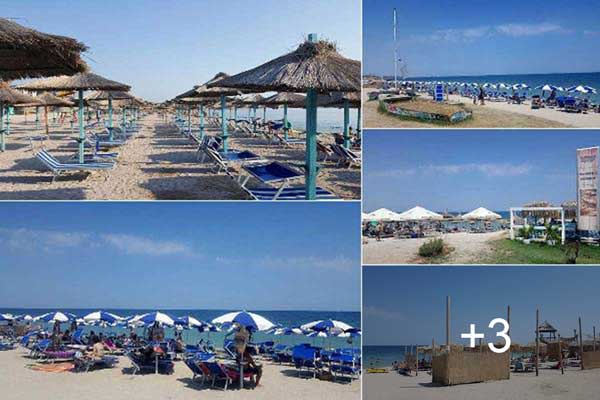
Pictures from August in previous years, which will soon be repeated. The sun is shining, it will get very hot, and the water is wonderfully fresh.
The Romanian seaside stretches for about 70 km and includes, besides Vama Veche, places like Constanta, Mamaia, Mamaia-Sat, Eforie Nord and Sud, Costinesti, Olimp, Neptun, Mangalia, and several others. There are also long (and deserted) beaches in the Danube Delta region, between Sulina and Sf. Gheorghe. The total length of the Romanian Black Sea coast is about 280 kilometers.
Our destination (the pictures) was Vama Veche 😁, the southernmost place on the Romanian Black Sea coast, just a few hundred meters from the border with Bulgaria.
Vama Veche is mainly visited by a younger crowd; it is the party zone, the so-called "Malle" of Romania, with about 3,000 to 4,000 visitors on weekends and loud music around the clock.
The Romanian seaside stretches for about 70 km and includes, besides Vama Veche, places like Constanta, Mamaia, Mamaia-Sat, Eforie Nord and Sud, Costinesti, Olimp, Neptun, Mangalia, and several others. There are also long (and deserted) beaches in the Danube Delta region, between Sulina and Sf. Gheorghe. The total length of the Romanian Black Sea coast is about 280 kilometers.
Our destination (the pictures) was Vama Veche 😁, the southernmost place on the Romanian Black Sea coast, just a few hundred meters from the border with Bulgaria.
Vama Veche is mainly visited by a younger crowd; it is the party zone, the so-called "Malle" of Romania, with about 3,000 to 4,000 visitors on weekends and loud music around the clock.
Kerz Monastery in Transylvania | Sibiu county
(08 July 2026)
X
(08 July 2026)
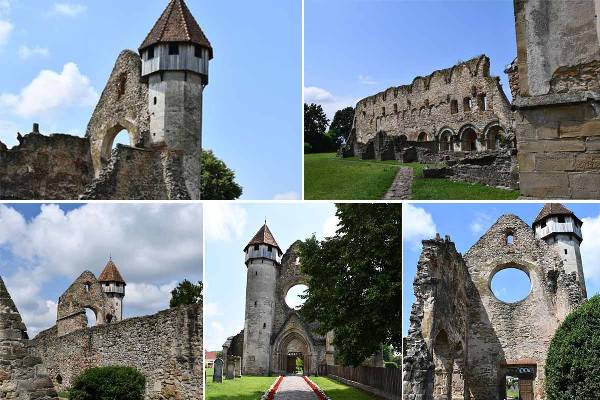
Carta Monastery (Kerz in German) is a former Cistercian (Benedictine) monastery in Transylvania, Romania.
It is located on the left bank of the Olt River, almost exactly halfway between the cities of Sibiu and Făgăraș, and is currently an Evangelical Lutheran church.
The exact date of the foundation of the Carta Monastery (Latin: monasterium beatae Mariae virginis in Candelis de Kerch) is unknown. A document from Constanta, dated 17 April 1418, issued by Sigismund, King of Hungary, vaguely states that the monastery was founded, built and granted rights and privileges by its predecessors. Cistercian documents from the 13th-15th centuries, collected and analysed by Leopold Janauschek, mention the year of the monastery's foundation as around 1202-1203.monastery around 1202-1203.
It is located on the left bank of the Olt River, almost exactly halfway between the cities of Sibiu and Făgăraș, and is currently an Evangelical Lutheran church.
The exact date of the foundation of the Carta Monastery (Latin: monasterium beatae Mariae virginis in Candelis de Kerch) is unknown. A document from Constanta, dated 17 April 1418, issued by Sigismund, King of Hungary, vaguely states that the monastery was founded, built and granted rights and privileges by its predecessors. Cistercian documents from the 13th-15th centuries, collected and analysed by Leopold Janauschek, mention the year of the monastery's foundation as around 1202-1203.monastery around 1202-1203.
Evening mood on Sulina beach
(01 July 2026)
X
(01 July 2026)
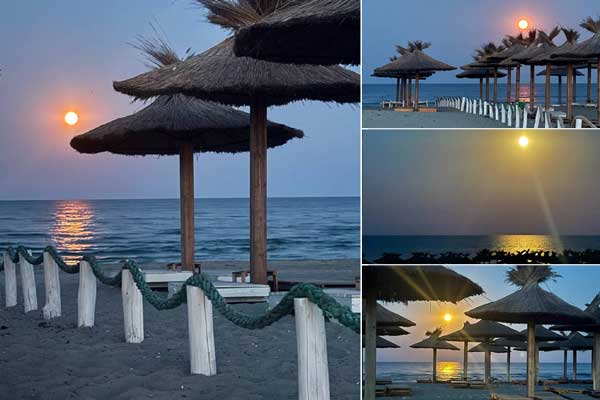
Sulina, the town in the Danube Delta, located where the Danube flows into the Black Sea.
Beautiful pictures (late June 2026) by our friend Călin from a wonderful beach that is unlike the beaches around Constanta.
https://discover-sulina.com | https://outnwild.ro
Beautiful pictures (late June 2026) by our friend Călin from a wonderful beach that is unlike the beaches around Constanta.
https://discover-sulina.com | https://outnwild.ro
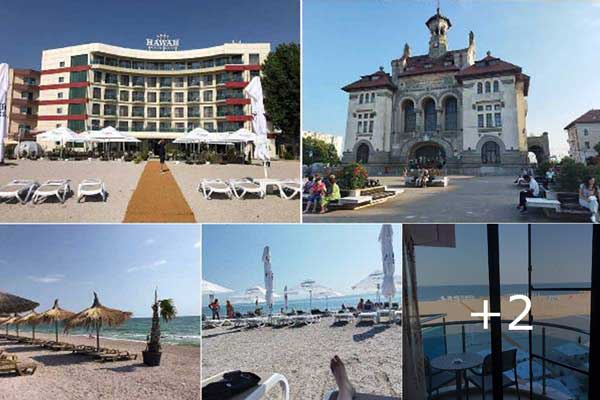
Off to HAWAII ... beach, sea ... Constanța
(26 June 2026)
X
(26 June 2026)
Photos from the motorcycle friends of our dear Roland 🥰, who recently (mid-June 2025) took a tour through Romania.
The route went via Timișoara, Deva, the Transfagarasan to Hawaii ... Constanța 😅, with many wonderful experiences, memories, and photos (more coming soon). Here is part 4 of 4, starting with the end, with the city of Constanța on the Black Sea.
The route went via Timișoara, Deva, the Transfagarasan to Hawaii ... Constanța 😅, with many wonderful experiences, memories, and photos (more coming soon). Here is part 4 of 4, starting with the end, with the city of Constanța on the Black Sea.
Almost there... summer at the Black Sea / beach
(24 May 2026)
X
(24 May 2026)
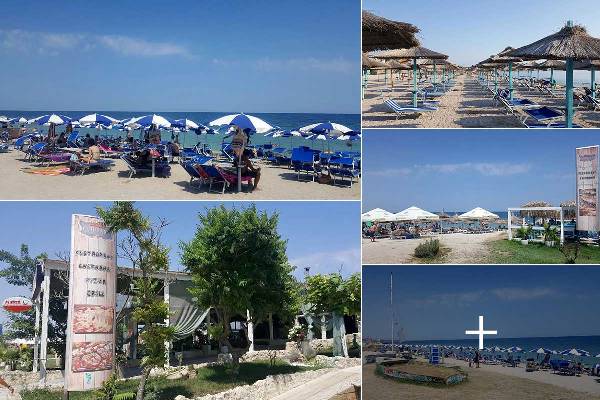
Pictures from August of previous years, which will be repeated again in just a few weeks. It was hot, very hot (32 to 38 degrees Celsius and sometimes even more), and the water was wonderfully refreshing.
Our destination was Vama Veche 😁, the southernmost town on Romania’s Black Sea coast, located just a few hundred meters from the Bulgarian border. This year, temperatures of 30 degrees Celsius are already forecast for the end of June, and by the beginning of July at the latest, it begins... summer vacation at the Black Sea 🥰
Romania’s seaside coast stretches for about 70 km and includes, besides Vama Veche, places such as Constanta, Mamaia, Mamaia-Sat, Eforie Nord and Sud, Costinesti, Olimp, Neptun, Mangalia, and several others. There are also long (and secluded) beaches in the Danube Delta region, between Sulina and Sf. Gheorghe.
Vama Veche is mainly visited by a younger crowd. It is the party hotspot, in a way the Romanian equivalent of “Malle,” attracting around 3,000–4,000 visitors on weekends, with loud music around the clock.
Our destination was Vama Veche 😁, the southernmost town on Romania’s Black Sea coast, located just a few hundred meters from the Bulgarian border. This year, temperatures of 30 degrees Celsius are already forecast for the end of June, and by the beginning of July at the latest, it begins... summer vacation at the Black Sea 🥰
Romania’s seaside coast stretches for about 70 km and includes, besides Vama Veche, places such as Constanta, Mamaia, Mamaia-Sat, Eforie Nord and Sud, Costinesti, Olimp, Neptun, Mangalia, and several others. There are also long (and secluded) beaches in the Danube Delta region, between Sulina and Sf. Gheorghe.
Vama Veche is mainly visited by a younger crowd. It is the party hotspot, in a way the Romanian equivalent of “Malle,” attracting around 3,000–4,000 visitors on weekends, with loud music around the clock.
Constanta ... at the Black Sea
(24 May 2026)
X
(24 May 2026)
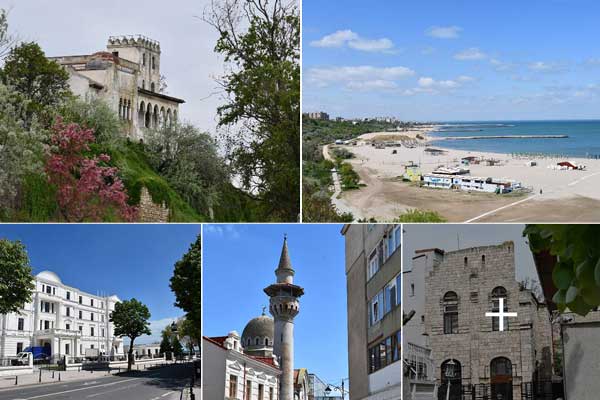
Constanta (German: Konstanza) is not only home to the newly renovated old Casino, but also to the Opera, museums, the Great Mosque, the House with Lions, the marina, many cafés and restaurants, and the Black Sea.
Current pictures from May 13 / 14, 2026.
Constanta has a history of more than 2,000 years, documented in the National Museum of History and Archaeology. In the adjacent Mosaic Museum, Roman floor mosaics from the 4th century AD can be seen. Nearby is also the Carol I Mosque, which is covered with a huge Persian carpet and whose minaret rises high above the city.
Current pictures from May 13 / 14, 2026.
Constanta has a history of more than 2,000 years, documented in the National Museum of History and Archaeology. In the adjacent Mosaic Museum, Roman floor mosaics from the 4th century AD can be seen. Nearby is also the Carol I Mosque, which is covered with a huge Persian carpet and whose minaret rises high above the city.
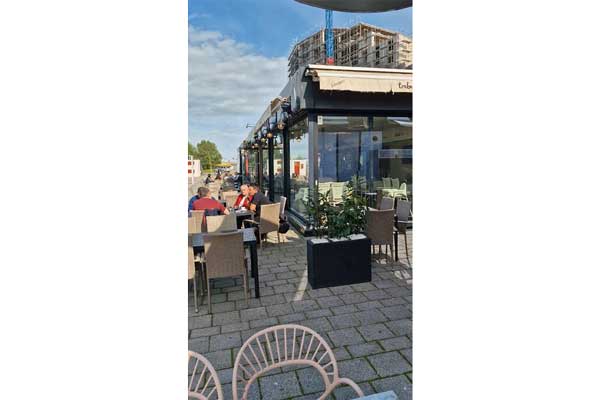
Constanta | Harbor, Ferris wheel, and the Black Sea
(19 May 2026)
X
(19 May 2026)
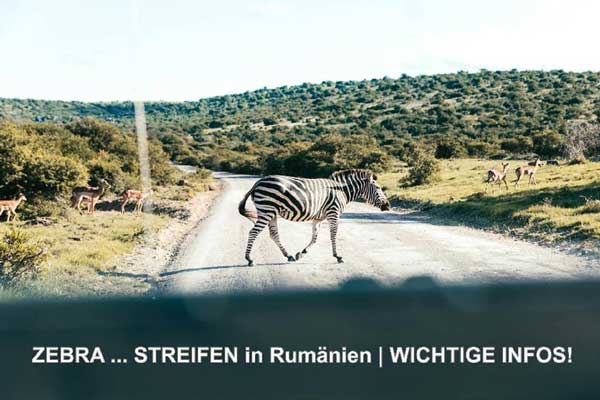
Zebra crossings in Romania | What you should know
(16 May 2026)
X
(16 May 2026)
Zebra crossings in Romania | What you should know
Zebra crossings exist in almost every country, but unfortunately, the rules can vary. You should know these types of zebra crossings and the corresponding regulations when traveling to Romania!
# Zebra crossings (without traffic lights)
In Romania, as a driver, you MUST ALWAYS stop at a zebra crossing if a pedestrian wants to cross the street or shows signs of doing so. Sometimes it is not really clear if someone wants to cross, or you don't expect a crossing (multi-lane road with a 70 km/h limit), but... at a zebra crossing without traffic lights, the driver MUST always stop.
# Zebra crossings (with traffic lights for both drivers and pedestrians)
If the light is red, you stop; if it is flashing or off (e.g., at night), the rule above applies!
# Zebra crossings (WITH traffic lights for pedestrians, but WITHOUT traffic lights for drivers)
For us, this is the most dangerous and complicated variant (seen, for example, in Bucharest, Constanta, ...). You are driving on a multi-lane road in an urban area, and a zebra crossing appears (without a light for drivers, but with one for pedestrians). As long as the pedestrians have a red light, you must/may just keep driving. As soon as they get a green light, the very first rule applies again: you MUST stop! It is very, very difficult to recognize... especially in Bucharest, there are a huge number of these crossings. You have to be very, very careful here.
💡 VERY IMPORTANT
Near kindergartens, schools, and hospitals, zebra crossings are often accompanied by a speed limit of 30 km/h. Please be sure to observe this!
💡 AN EQUALLY IMPORTANT NOTE
Especially in larger cities, it can happen that, for example, at multi-lane entrances to a roundabout, a bus or truck blocks your view and suddenly stops for no apparent reason. In this case, you should also stop and, if necessary, creep forward very, very slowly. It can happen that the bus stops for a zebra crossing but hides both the pedestrian and the sign. The pedestrian crosses the street and then emerges from in front of the bus without warning. This is also a very dangerous situation; you should always pay attention.
# THE PEDESTRIANS .. also good to know:
"The Shy One" ... they stand at the edge of the road at the crossing but don't indicate that they want to cross. You still have to stop and maybe wave them across!
"The Confident One" ... there are pedestrians who know their "rights" and just start walking. No look to the left or right; the cars will surely stop. Please pay attention.
And finally, "The one who doesn't actually want to cross" ... but is just having a chat with a neighbor right at the curb or on the crossing. Here too, since you can't really tell the intention... you should stop as a precaution.
In conclusion: Driving in Romania definitely requires EVEN MORE attention than in countries like Germany and Austria. And stick to the speed limits, regardless of what the local drivers do.
Zebra crossings exist in almost every country, but unfortunately, the rules can vary. You should know these types of zebra crossings and the corresponding regulations when traveling to Romania!
# Zebra crossings (without traffic lights)
In Romania, as a driver, you MUST ALWAYS stop at a zebra crossing if a pedestrian wants to cross the street or shows signs of doing so. Sometimes it is not really clear if someone wants to cross, or you don't expect a crossing (multi-lane road with a 70 km/h limit), but... at a zebra crossing without traffic lights, the driver MUST always stop.
# Zebra crossings (with traffic lights for both drivers and pedestrians)
If the light is red, you stop; if it is flashing or off (e.g., at night), the rule above applies!
# Zebra crossings (WITH traffic lights for pedestrians, but WITHOUT traffic lights for drivers)
For us, this is the most dangerous and complicated variant (seen, for example, in Bucharest, Constanta, ...). You are driving on a multi-lane road in an urban area, and a zebra crossing appears (without a light for drivers, but with one for pedestrians). As long as the pedestrians have a red light, you must/may just keep driving. As soon as they get a green light, the very first rule applies again: you MUST stop! It is very, very difficult to recognize... especially in Bucharest, there are a huge number of these crossings. You have to be very, very careful here.
💡 VERY IMPORTANT
Near kindergartens, schools, and hospitals, zebra crossings are often accompanied by a speed limit of 30 km/h. Please be sure to observe this!
💡 AN EQUALLY IMPORTANT NOTE
Especially in larger cities, it can happen that, for example, at multi-lane entrances to a roundabout, a bus or truck blocks your view and suddenly stops for no apparent reason. In this case, you should also stop and, if necessary, creep forward very, very slowly. It can happen that the bus stops for a zebra crossing but hides both the pedestrian and the sign. The pedestrian crosses the street and then emerges from in front of the bus without warning. This is also a very dangerous situation; you should always pay attention.
# THE PEDESTRIANS .. also good to know:
"The Shy One" ... they stand at the edge of the road at the crossing but don't indicate that they want to cross. You still have to stop and maybe wave them across!
"The Confident One" ... there are pedestrians who know their "rights" and just start walking. No look to the left or right; the cars will surely stop. Please pay attention.
And finally, "The one who doesn't actually want to cross" ... but is just having a chat with a neighbor right at the curb or on the crossing. Here too, since you can't really tell the intention... you should stop as a precaution.
In conclusion: Driving in Romania definitely requires EVEN MORE attention than in countries like Germany and Austria. And stick to the speed limits, regardless of what the local drivers do.
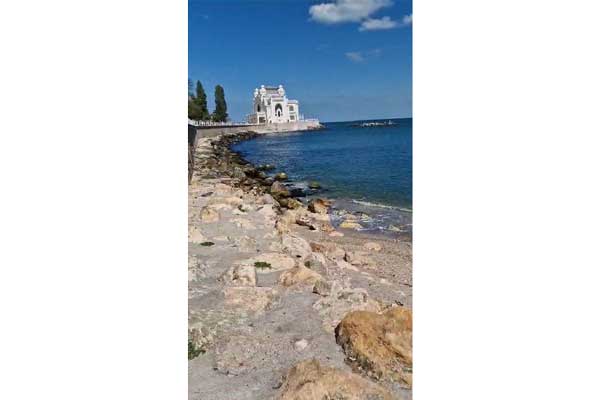
Constanta | The Black Sea and the newly renovated Casino | Today, May 13, 2026
(13 May 2026)
X
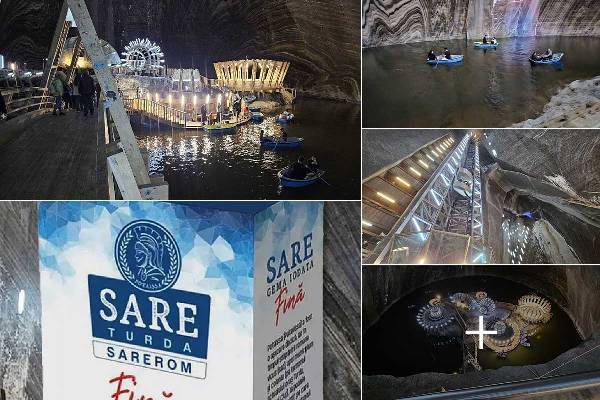
Turda Salt Mine | Cluj County
(17 April 2026)
X
(17 April 2026)
Always a pleasure: The Turda Salt Mine is a true museum of the history of salt mining. It is located in the city of Turda, in Cluj County.
The temperature in the salt mine is constantly between 10-12 degrees. It is one of the oldest and most famous salt mines in Transylvania / Romania.
And if you want to take home a souvenir after your visit, just visit a (Romanian) Kaufland. The 1 kg package of Turda salt costs about 2 lei (40 cents), price as of November 2025.
More salt mines and information in Romania:
https://willkommen-in-rumänien.de/#Salzbergwerke
We thank Tom & Helga for these beautiful pictures from their Romania tour in September and October 2024. Many thanks!
The temperature in the salt mine is constantly between 10-12 degrees. It is one of the oldest and most famous salt mines in Transylvania / Romania.
And if you want to take home a souvenir after your visit, just visit a (Romanian) Kaufland. The 1 kg package of Turda salt costs about 2 lei (40 cents), price as of November 2025.
More salt mines and information in Romania:
https://willkommen-in-rumänien.de/#Salzbergwerke
We thank Tom & Helga for these beautiful pictures from their Romania tour in September and October 2024. Many thanks!
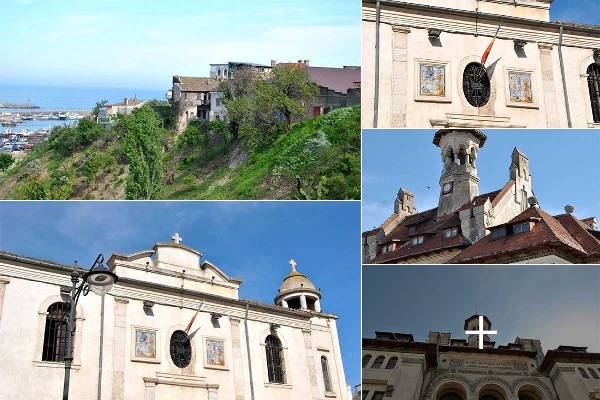
Constanta | Much more than the sea (Part 3 of 3)
(14 April 2026)
X
(14 April 2026)
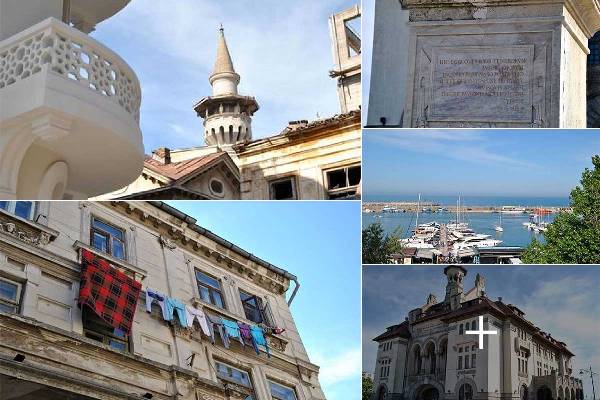
You should visit it ... the opera, museums, the Great Mosque, the lion house, the marina, many cafes and restaurants in beautiful squares, parks and more ...
Constanta on the Black Sea has a history of over 2,000 years, which is documented in the National Museum of History and Archaeology. Roman floor mosaics from the 4th century AD can be seen in the nearby Mosaic Museum. Also nearby is the Carol I Mosque, covered with a huge Persian carpet and whose minaret towers over the city.
Constanta on the Black Sea has a history of over 2,000 years, which is documented in the National Museum of History and Archaeology. Roman floor mosaics from the 4th century AD can be seen in the nearby Mosaic Museum. Also nearby is the Carol I Mosque, covered with a huge Persian carpet and whose minaret towers over the city.
Constanta | Much more than the sea (Part 2 of 3)
(14 April 2026)
X
(14 April 2026)
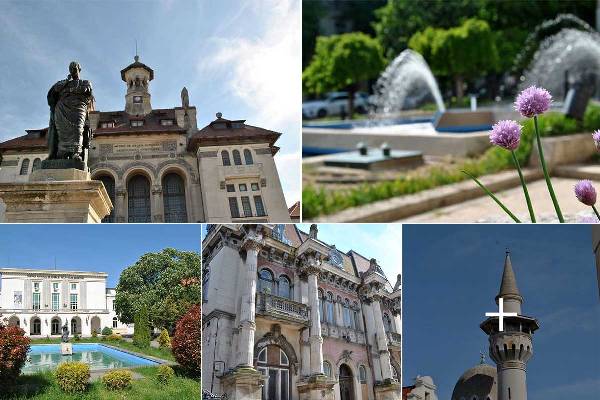
You should visit it ... the opera, museums, the Great Mosque, the lion house, the marina, many cafes and restaurants in beautiful squares, parks and more ...
Constanta on the Black Sea has a history of over 2,000 years, which is documented in the National Museum of History and Archaeology. Roman floor mosaics from the 4th century AD can be seen in the nearby Mosaic Museum. Also nearby is the Carol I Mosque, covered with a huge Persian carpet and whose minaret towers over the city.
Constanta on the Black Sea has a history of over 2,000 years, which is documented in the National Museum of History and Archaeology. Roman floor mosaics from the 4th century AD can be seen in the nearby Mosaic Museum. Also nearby is the Carol I Mosque, covered with a huge Persian carpet and whose minaret towers over the city.
Constanta | Much more than the sea (Part 1 of 3)
(14 April 2026)
X
(14 April 2026)
You should visit it ... the opera, museums, the Great Mosque, the lion house, the marina, many cafes and restaurants in beautiful squares, parks and more ...
Constanta on the Black Sea has a history of over 2,000 years, which is documented in the National Museum of History and Archaeology. Roman floor mosaics from the 4th century AD can be seen in the nearby Mosaic Museum. Also nearby is the Carol I Mosque, covered with a huge Persian carpet and whose minaret towers over the city.
Constanta on the Black Sea has a history of over 2,000 years, which is documented in the National Museum of History and Archaeology. Roman floor mosaics from the 4th century AD can be seen in the nearby Mosaic Museum. Also nearby is the Carol I Mosque, covered with a huge Persian carpet and whose minaret towers over the city.
Motorcycle tour through Romania | Summer 2025
(01 April 2026)
X
(01 April 2026)
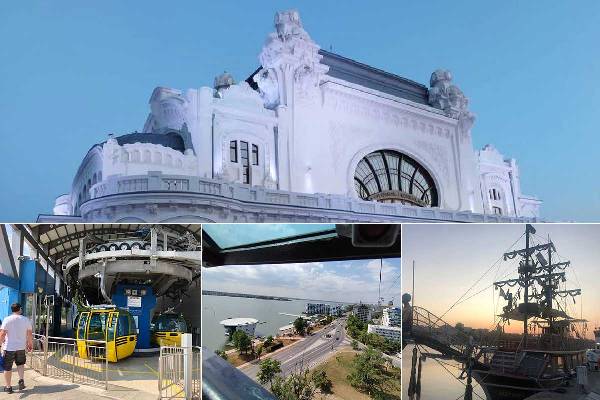
Beautiful pictures from Constanta and Mamaia at the Black Sea, and the freshly renovated historic Casino, from the motorcycle friends of our dear Roland 🥰, who took a tour through Romania in mid-June 2025.
https://welcome-to-romania.com | https://urlaub-in-rumänien.de
https://welcome-to-romania.com | https://urlaub-in-rumänien.de
Plan now: Summer at the Black Sea / beach
(24 January 2026)
X
(24 January 2026)
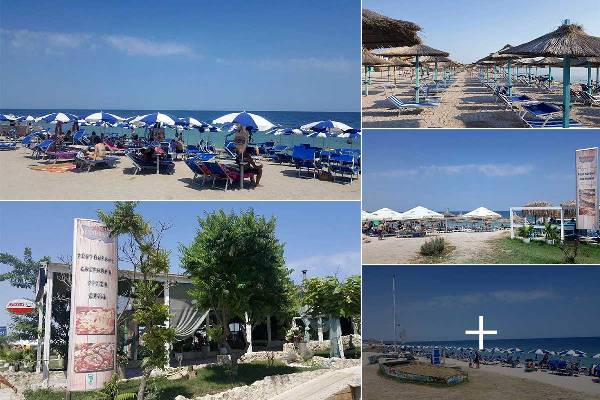
Pictures from August of previous years, which are currently repeating themselves. The sun is shining, it is hot, and the water is wonderfully fresh.
https://welcome-to-romania.com | https://urlaub-in-rumänien.de
The Romanian seaside stretches over about 70 km and includes, besides Vama Veche, places like Constanta, Mamaia, Mamaia-Sat, Eforie Nord and Sud, Costinesti, Olimp, Neptun, Mangalia, and several more. Likewise, long (and lonely) beaches are located in the Danube Delta region, between Sulina and Sf. Gheorghe.
Our destination (the pictures) was Vama Veche 😁, the southernmost place on the Romanian Black Sea coast, only a few hundred meters from the border with Bulgaria.
Vama Veche is primarily visited by a younger audience; it is the party mile, seen as the "Malle" of Romania, with about 3,000 - 4,000 visitors on weekends and loud music around the clock.
https://welcome-to-romania.com | https://urlaub-in-rumänien.de
The Romanian seaside stretches over about 70 km and includes, besides Vama Veche, places like Constanta, Mamaia, Mamaia-Sat, Eforie Nord and Sud, Costinesti, Olimp, Neptun, Mangalia, and several more. Likewise, long (and lonely) beaches are located in the Danube Delta region, between Sulina and Sf. Gheorghe.
Our destination (the pictures) was Vama Veche 😁, the southernmost place on the Romanian Black Sea coast, only a few hundred meters from the border with Bulgaria.
Vama Veche is primarily visited by a younger audience; it is the party mile, seen as the "Malle" of Romania, with about 3,000 - 4,000 visitors on weekends and loud music around the clock.
Review: June 2025 | Motorcycle tour through Romania
(23 December 2025)
X
(23 December 2025)
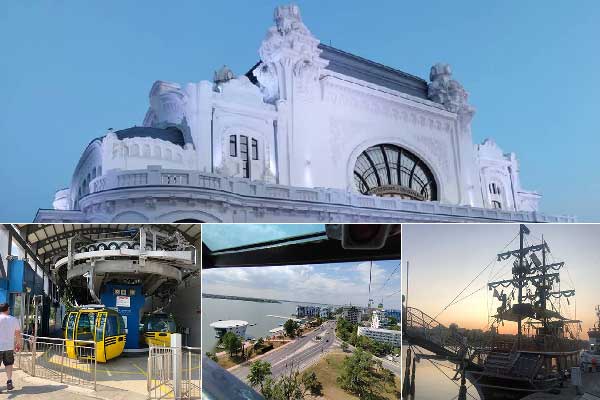
Beautiful pictures from Constanta (Konstanza) on the Black Sea and the beautiful, recently renovated historic Casino, sent by the motorcycle friends of our dear Roland 🥰, who undertook a motorcycle tour through Romania in recent days (mid-June 2025).
https://welcome-to-romania.com | https://urlaub-in-rumänien.de
https://welcome-to-romania.com | https://urlaub-in-rumänien.de
Cluj-Napoca | A city that never sleeps
(06 November 2025)
X
(06 November 2025)
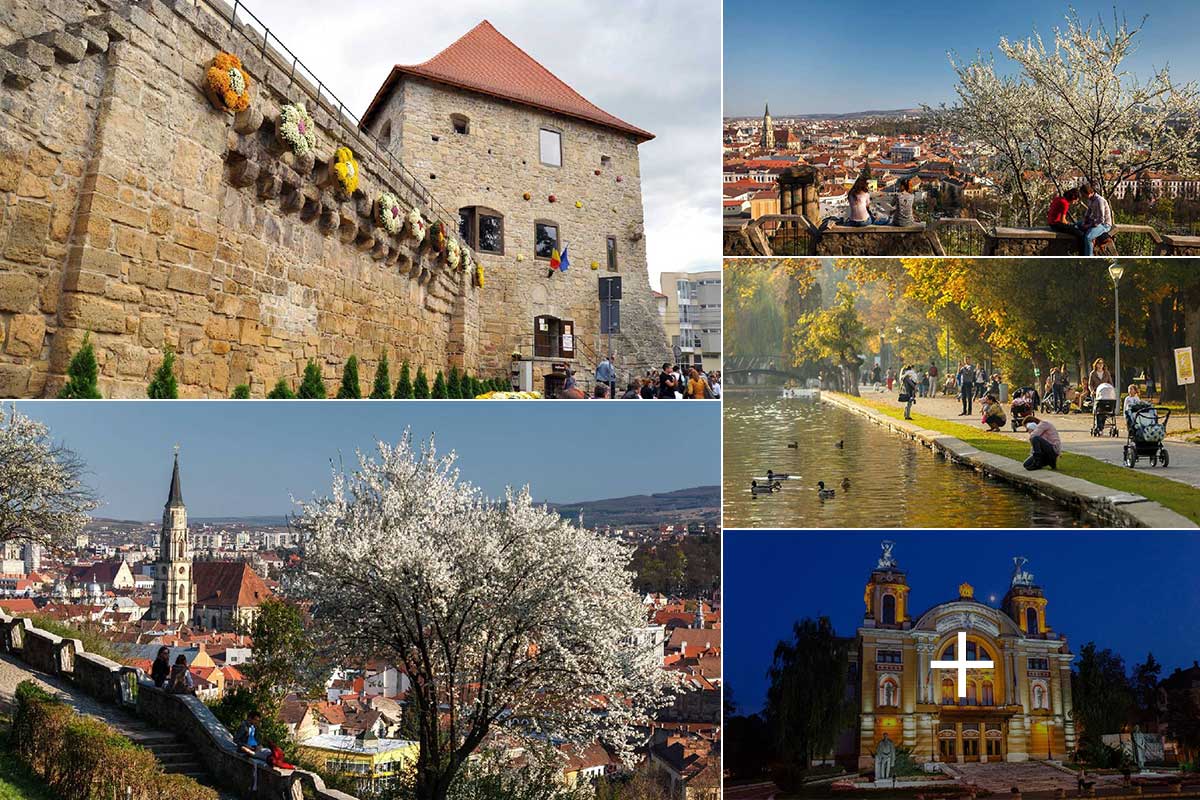
Cluj-Napoca (German: Klausenburg, Hungarian: Kolozsvar) is (probably*) the second largest city in Romania and the capital of Cluj County in Transylvania.
Cluj-Napoca, with about 400,000 inhabitants, is considered the unofficial capital of the Transylvania region. The city has universities, a vibrant nightlife, and many buildings from the times of Hungarian and Saxon rule. Around the main square, Piata Unirii, are the Gothic St. Michael’s Church and an equestrian statue of King Matthias Corvinus, who lived in the 15th century. The baroque Banffy Palace is now a museum displaying Romanian art.
Cluj-Napoca has an international airport and is located in the northwest of Romania.
* It could also be Iasi, Timisoara or Constanta. Unfortunately, there are no exact figures.
We thank the city of Cluj-Napoca for granting permission to use these pictures.
Cluj-Napoca, with about 400,000 inhabitants, is considered the unofficial capital of the Transylvania region. The city has universities, a vibrant nightlife, and many buildings from the times of Hungarian and Saxon rule. Around the main square, Piata Unirii, are the Gothic St. Michael’s Church and an equestrian statue of King Matthias Corvinus, who lived in the 15th century. The baroque Banffy Palace is now a museum displaying Romanian art.
Cluj-Napoca has an international airport and is located in the northwest of Romania.
* It could also be Iasi, Timisoara or Constanta. Unfortunately, there are no exact figures.
We thank the city of Cluj-Napoca for granting permission to use these pictures.


