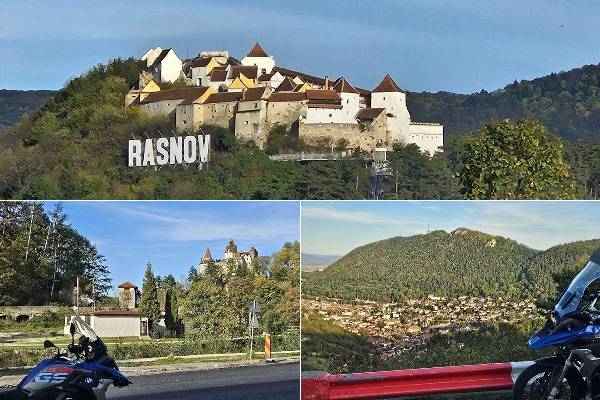
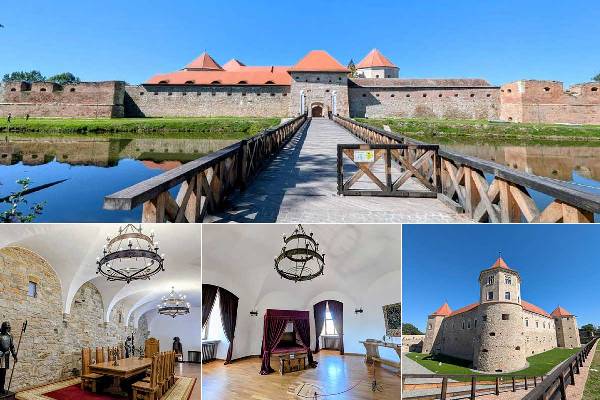
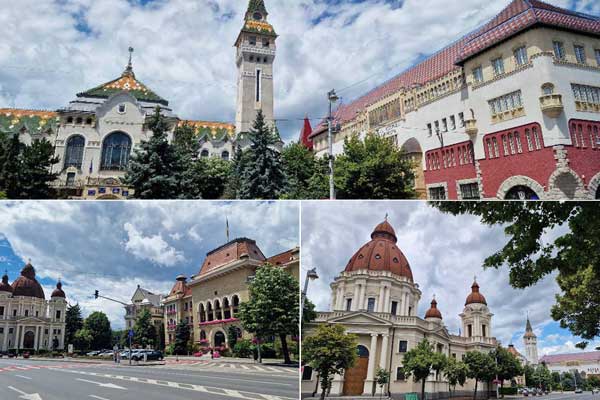
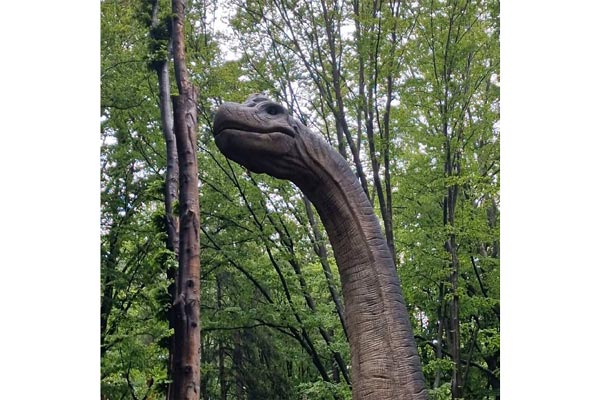
The dinopark with the same name is just a few meters away from the Râșnov Castle (in the Brașov district). Life-size dinosaurs, multimedia presentations, a history museum, a “real” volcano and much, much more invite both children and adults to a fun and informative visit. The park is open daily (Monday to Sunday) between 10:00 and 17:30 or 18:30.
Our UiR database: You can also visit and explore this nearby ...Zur Suchfunktion!

Viscri City and Fortified Church | Brasov County
(16 August 2026)
X

(16 August 2026)
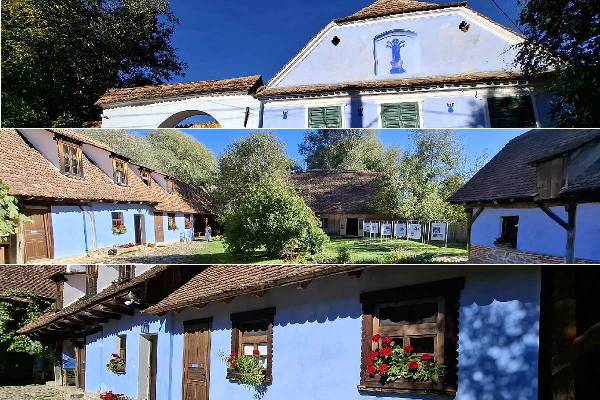
The village of Viscri (in German: Deutsch-Weisskirch, in Hungarian: Szaszfeheregyhaza) is located in Brașov County in Transylvania.
It lies northwest of the town/citadel of Rupea and southeast of the city of Sighișoara. Between the 18th and 20th centuries, the village had about 700 inhabitants, mainly Transylvanian Saxons and a Romanian village section. Viscri is notable for its fortified church and the typical Saxon village layout.
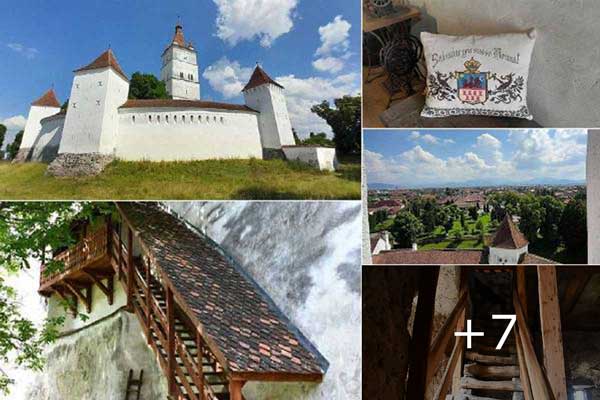
The village was founded by Transylvanian Saxons at the end of the 12th century and was first mentioned in documents in 1185. At the northwest end of the village stands the fortified church.
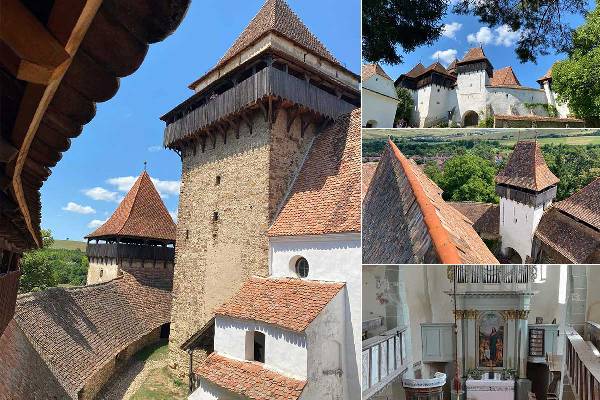
In the 12th century, before the German settlers arrived, the Székelys (a Hungarian-speaking ethnic group in eastern Transylvania) built a small Romanesque hall church here. In the 13th century, it was expanded. After the first Turkish incursions, the church was fortified in the 14th century, and a defensive wall with towers was built.
We thank photographer Brian Randall for the permission to use these pictures (early September 2021).
It lies northwest of the town/citadel of Rupea and southeast of the city of Sighișoara. Between the 18th and 20th centuries, the village had about 700 inhabitants, mainly Transylvanian Saxons and a Romanian village section. Viscri is notable for its fortified church and the typical Saxon village layout.
The village was founded by Transylvanian Saxons at the end of the 12th century and was first mentioned in documents in 1185. At the northwest end of the village stands the fortified church.
In the 12th century, before the German settlers arrived, the Székelys (a Hungarian-speaking ethnic group in eastern Transylvania) built a small Romanesque hall church here. In the 13th century, it was expanded. After the first Turkish incursions, the church was fortified in the 14th century, and a defensive wall with towers was built.
We thank photographer Brian Randall for the permission to use these pictures (early September 2021).

ZABOLA ESTATE TRANSYLVANIA | Covasna County
(16 August 2026)
X

(16 August 2026)
August is one of the most beautiful times to experience Zabola Estate (approximately 60 km from Brasov / Kronstadt). Long summer days, a peaceful setting, and unforgettable moments await you—and this month, there are even more reasons to plan your getaway.
https://www.zabola.com/
Book two or more nights between August 1 and 31 and receive a 15% discount on your stay when booking directly via the following website using the promotional code SUMMER15.
https://www.zabola.com/
Book two or more nights between August 1 and 31 and receive a 15% discount on your stay when booking directly via the following website using the promotional code SUMMER15.

Sfantu Gheorghe | Covasna County
(14 August 2026)

ZABOLA ESTATE TRANSYLVANIA | Covasna County
(14 August 2026)
X

(14 August 2026)
August is one of the most beautiful times to experience Zabola Estate (approx. 60 km from Brasov / Kronstadt). Long summer days, a peaceful setting, and unforgettable moments await you—and this month, there are even more reasons to plan your getaway.
Book two or more nights between August 1 and 31 and receive a 15% discount on your stay when booking directly via the following website using the promo code SUMMER15.
https://www.zabola.com/accommodation/
Tucked away in the wild Carpathians lies Zabola, an inhabited family estate where forests, gardens, and history spread across 500 hectares. The castle park, originally designed as an English landscape garden, now combines serene elegance with untamed beauty. Still inhabited by the family that has cared for it across generations, Zabola invites you to slow down, unwind, and feel the rhythm of a place where nature and memory meet.
https://www.zabola.com/
Whether you are planning a romantic getaway, a family holiday, or simply a few quiet days surrounded by nature—we would be delighted to welcome you.
Book two or more nights between August 1 and 31 and receive a 15% discount on your stay when booking directly via the following website using the promo code SUMMER15.
https://www.zabola.com/accommodation/
Tucked away in the wild Carpathians lies Zabola, an inhabited family estate where forests, gardens, and history spread across 500 hectares. The castle park, originally designed as an English landscape garden, now combines serene elegance with untamed beauty. Still inhabited by the family that has cared for it across generations, Zabola invites you to slow down, unwind, and feel the rhythm of a place where nature and memory meet.
https://www.zabola.com/
Whether you are planning a romantic getaway, a family holiday, or simply a few quiet days surrounded by nature—we would be delighted to welcome you.

Bran / Törzburg | Brasov County
(11 August 2026)
X

(11 August 2026)
"The Home of Dracula", even though he never lived there and his "flesh-and-blood" prototype, Vlad III Țepeș Drăculea, probably was never there.
Beautiful pictures by Mr. Iercosan Marian from a few days ago (end of September 2025). In any case, the castle is definitely worth a visit 🥰

Marienburg / Feldioara | Brasov County
(10 August 2026)
X

(10 August 2026)
Marienburg from Feldioara (Romanian name of Marienburg) is a medieval castle of the Teutonic Order in the region of Transylvania in the district of Brașov.
https://xn--willkommen-in-rumnien-m2b.de/ | https://welcome-to-romania.com
The castle offers a wonderful view of the surrounding area and the mountains of Brașov (German name: Kronstadt), it is located at approx. 20 kilometers away from Brașov on the way to Sighișoara (in German: Schäßburg) and was built on a hill (almost 500 meters above sea level).
In 1211 King Andrew II called. from Hungary The Teutonic Knights in support of the Kumans in the country to secure the eastern border of his growing kingdom. The king granted them many privileges, including immunity, the right to self-government, and the construction of stone fortresses to ensure the environment. In 1838, the city of Marienburg (Romanian name: Feldioara) was severely destroyed by an earthquake. Between 2013 and 2017, the ruins of the castle were renovated and largely rebuilt.
https://xn--willkommen-in-rumnien-m2b.de/ | https://welcome-to-romania.com
The castle offers a wonderful view of the surrounding area and the mountains of Brașov (German name: Kronstadt), it is located at approx. 20 kilometers away from Brașov on the way to Sighișoara (in German: Schäßburg) and was built on a hill (almost 500 meters above sea level).
In 1211 King Andrew II called. from Hungary The Teutonic Knights in support of the Kumans in the country to secure the eastern border of his growing kingdom. The king granted them many privileges, including immunity, the right to self-government, and the construction of stone fortresses to ensure the environment. In 1838, the city of Marienburg (Romanian name: Feldioara) was severely destroyed by an earthquake. Between 2013 and 2017, the ruins of the castle were renovated and largely rebuilt.

Roman Catholic Church ,,Saints Peter and Paul” | Kronstadt (Brasov)
(09 August 2026)
X

(09 August 2026)
The Roman Catholic Church „ Saints Peter and Paul ” from Brașov ( Brasov ) was founded in the second half of the 18th century. 19th century built according to the plans of the architect Karl Joseph Lamasch.
The church building is the only baroque building in the city, the altar is made of wood and gilded, the stained glass windows were built in Budapest, and the organ comes from Timisoara. The church houses statues of St. Peter, St. Paul, St. Anna and St. Anthony of Padua
Priest Ignatius Wagensei asked Empress Maria Theresa for support for the construction of this church, and construction began in the summer of 1776. In 1787 the church was consecrated by the bishop of Transylvania, Ignatie Batthyany.
The church building is the only baroque building in the city, the altar is made of wood and gilded, the stained glass windows were built in Budapest, and the organ comes from Timisoara. The church houses statues of St. Peter, St. Paul, St. Anna and St. Anthony of Padua
Priest Ignatius Wagensei asked Empress Maria Theresa for support for the construction of this church, and construction began in the summer of 1776. In 1787 the church was consecrated by the bishop of Transylvania, Ignatie Batthyany.

The way to the Canionul Sapte Scari | Brasov County
(03 August 2026)
X

(03 August 2026)
Shortly after leaving Brasov in the direction of Sinaia (Bucharest), turn left towards the Sapte Scari (Seven Ladders) gorge.
It is a good hour's walk to the gorge or the seven ladders, which is lined by a stream with clear, cold water and lots of nature. Even if you don't enter the gorge via the ladders (there's a charge, another three hours' walk!), the hike there and back is definitely beautiful.
For the hike: sturdy footwear is highly recommended. In places, you walk over tree trunks, small wooden bridges and loose stones or you walk directly in the stream bed or on a stony path. You should definitely take something to drink with you.
Pictures: Beginning of September 2023
It is a good hour's walk to the gorge or the seven ladders, which is lined by a stream with clear, cold water and lots of nature. Even if you don't enter the gorge via the ladders (there's a charge, another three hours' walk!), the hike there and back is definitely beautiful.
For the hike: sturdy footwear is highly recommended. In places, you walk over tree trunks, small wooden bridges and loose stones or you walk directly in the stream bed or on a stony path. You should definitely take something to drink with you.
Pictures: Beginning of September 2023

Marienburg / Feldioara | Brașov County
(27 July 2026)
X

(27 July 2026)
Marienburg Castle in Feldioara (the Romanian name of the village of the same name, Marienburg) is a medieval castle of the Teutonic Order in the Transylvania region, in Brașov County.
The castle offers a wonderful view of the surrounding countryside and the mountains of Brașov (German name: Kronstadt), is located about 20 kilometres from Brașov on the road to Sighișoara (in German: Schäßburg), and was built on an elevation (nearly 500 metres above sea level).
In 1211, King Andrew II of Hungary summoned the Teutonic Order into the country to assist against the Cumans and secure the eastern border of his expanding kingdom. The king granted them numerous privileges, including immunity, the right to self-government, and permission to build stone fortresses to secure the area. In 1838, the town of Marienburg (Romanian name: Feldioara), along with the Teutonic Order's Marienburg Castle, was severely damaged by an earthquake. Between 2013 and 2017, extensive renovation and reconstruction of the castle ruins took place.
The castle offers a wonderful view of the surrounding countryside and the mountains of Brașov (German name: Kronstadt), is located about 20 kilometres from Brașov on the road to Sighișoara (in German: Schäßburg), and was built on an elevation (nearly 500 metres above sea level).
In 1211, King Andrew II of Hungary summoned the Teutonic Order into the country to assist against the Cumans and secure the eastern border of his expanding kingdom. The king granted them numerous privileges, including immunity, the right to self-government, and permission to build stone fortresses to secure the area. In 1838, the town of Marienburg (Romanian name: Feldioara), along with the Teutonic Order's Marienburg Castle, was severely damaged by an earthquake. Between 2013 and 2017, extensive renovation and reconstruction of the castle ruins took place.

Impressions from Brasov / Kronstadt
(25 July 2026)
X

(25 July 2026)
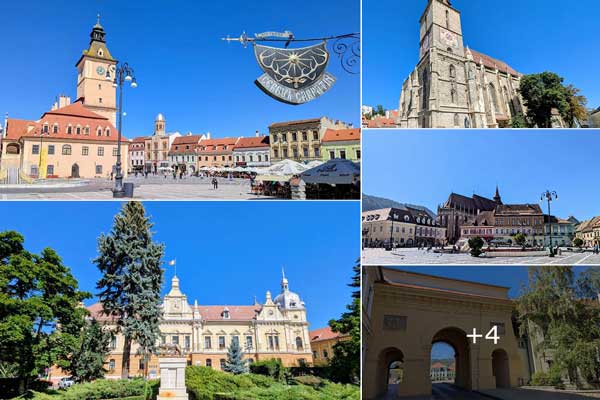
Pictures from yesterday, May 20, 2026, from Brasov / Kronstadt in Transylvania.
https://kronstadt-erleben.de | https://discover-brasov.com

Fortress | Fortified church | Museum | Honigberg / Harman
(23 July 2026)
X

(23 July 2026)
We were there a few days ago, in Transylvania, Brasov County, just a few kilometers from Kronstadt (Brasov)... and we were thrilled!
An hour flies by and there is something for everyone: for the lover of history and stories, for the friend of Transylvania, the adventurer, for families with children who can explore the battlements and the way of life from long ago and so much more!
Our conclusion: The visit is 100% worth it
https://urlaub-in-rumänien.de/de/ausflugsziele-sehenswertes-reiseziele-rumaenien/
An hour flies by and there is something for everyone: for the lover of history and stories, for the friend of Transylvania, the adventurer, for families with children who can explore the battlements and the way of life from long ago and so much more!
Our conclusion: The visit is 100% worth it
https://urlaub-in-rumänien.de/de/ausflugsziele-sehenswertes-reiseziele-rumaenien/

Rucăr-Bran Pass | Brasov & Arges County
(23 July 2026)
X

(23 July 2026)
The Rucăr-Bran Pass, also known as the Bran Pass, is a mountain pass in Romania that connects the counties of Brașov and Argeș.
It offers some of Romania’s most spectacular natural experiences, with views of the Bucegi Mountains in the Southern Carpathians. The villages of Fundata and Moieciu are located along the pass.
We thank Vlad the Impaler - Dracula for the permission to use this image.
It offers some of Romania’s most spectacular natural experiences, with views of the Bucegi Mountains in the Southern Carpathians. The villages of Fundata and Moieciu are located along the pass.
We thank Vlad the Impaler - Dracula for the permission to use this image.

Vlad III and (his) home | Törzburg / Bran
(23 July 2026)
X

(23 July 2026)
We don’t know exactly if the "nice gentleman" in the picture is meant to represent the former voivode of Wallachia or if he’s just showcasing his stylish attire as a witness of the times. 🦇🦇
He never actually lived here, but either way, the castle in Brasov County is definitely worth a visit 🥰
Beautiful pictures by Mr. Iercosan Marian from a few days ago (end of September 2025).
He never actually lived here, but either way, the castle in Brasov County is definitely worth a visit 🥰
Beautiful pictures by Mr. Iercosan Marian from a few days ago (end of September 2025).

Fagaras Fortress | Brasov County
(22 July 2026)
X

(22 July 2026)
On the way from Sibiu to Brasov lies the city of Fagaras. At the end of the 12th century, the city’s castle was only a wooden fortress, which was expanded into a stone fortress in the 14th century.
The fortress houses a museum, which can be visited just like the fortress itself. Right next to the fortress is the cathedral/church Sfantul Ioan Botezatorul.
Beautiful pictures by Mr. Iercosan Marian from the end of September 2025.
The fortress houses a museum, which can be visited just like the fortress itself. Right next to the fortress is the cathedral/church Sfantul Ioan Botezatorul.
Beautiful pictures by Mr. Iercosan Marian from the end of September 2025.

Homorod, close to Rupea (Reps)
(20 July 2026)
X

(20 July 2026)
Homorod (German: Hamruden, Hungarian: Homoród) is a community in Brasov County, near the town of Rupea. It consists of three villages: Homorod, Jimbor (Sommerburg, Szekelyzsombor), and Mercheasa (Streitfort, Mirkvásár).
The Romanesque church dedicated to Saint Peter, featuring a square choir, semicircular apse, and west tower, dates back to the 13th century. A massive eight-story keep was built above the choir, with a side length of 11 m and walls 3 m thick at the ground floor. After a fire, the church hall received its current coffered ceiling in 1792.
The community is located in the northern part of the county, on the border with Harghita County, about 60 km from Brașov. It sits on the banks of the Homorod River, at the confluence of the Homorodul Mare and Homorodul Mic.
The Romanesque church dedicated to Saint Peter, featuring a square choir, semicircular apse, and west tower, dates back to the 13th century. A massive eight-story keep was built above the choir, with a side length of 11 m and walls 3 m thick at the ground floor. After a fire, the church hall received its current coffered ceiling in 1792.
The community is located in the northern part of the county, on the border with Harghita County, about 60 km from Brașov. It sits on the banks of the Homorod River, at the confluence of the Homorodul Mare and Homorodul Mic.
Locations in the same category
No results found.