
Hotel Portal Village
Click on the following button to get to the offer of this German-speaking host.
County: Sibiu
Telefon: +40 (0)745 222 759
Address: Strada Utea 73, Sibiel 557234
Email: hello@portalgreen.ro

Our UiR database: You can also visit and explore nearby ...
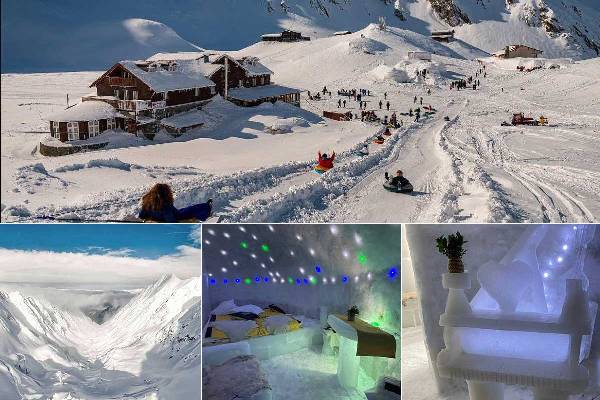
Coming again soon!? | The Ice Hotel at Lake Bâlea ☃️❄️😍🇷🇴
(05 November 2026)
X

(05 November 2026)
Do you know the Ice Hotel at Lake Bâlea? Not yet... perhaps it is time for a trip next winter 🥰
Unfortunately, we still do not know whether the hotel will be built again this winter!? The operator usually makes this decision only in mid-December, based on the current snow conditions.
The hotel is rebuilt every year and simply melts away again in spring 😅 Due to its location — at an altitude of 2,034 metres, at Lake Bâlea, in the Făgăraș Mountains, Sibiu County — cold and long winters are almost guaranteed. In addition to the wonderful winter landscape, the hotel is another highlight of this region.
Lake Bâlea can be reached by cable car / gondola, covering a distance of 3.7 km, Monday to Sunday from 9:00 a.m. to 5:00 p.m. The cable car starts at Bâlea Waterfall (Cabana Bâlea Cascadă).
Pictures from a previous Ice Hotel season in past years.
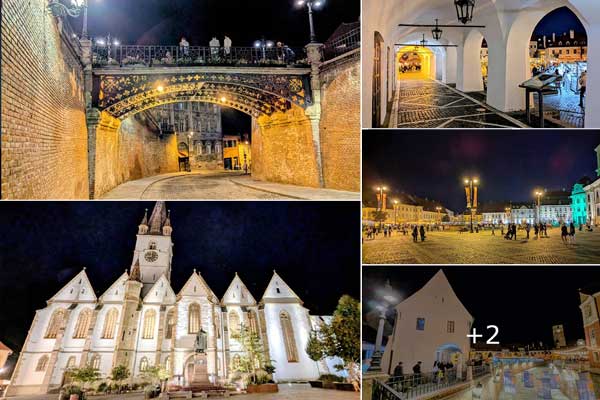
Sibiu / Hermannstadt at night | End of September 2025
(31 October 2026)
X
(31 October 2026)
Beautiful in every season, by day and by night ... Hermannstadt / Sibiu / Nagyszeben in Transylvania.
The old town and the city's fortification walls were built by Saxon settlers (the Transylvanian Saxons) in the 12th and 13th centuries and are still preserved today in many of their original features.
Beautiful pictures by Mr. Iercosan Marian from a few days ago (end of September 2025).
The old town and the city's fortification walls were built by Saxon settlers (the Transylvanian Saxons) in the 12th and 13th centuries and are still preserved today in many of their original features.
Beautiful pictures by Mr. Iercosan Marian from a few days ago (end of September 2025).
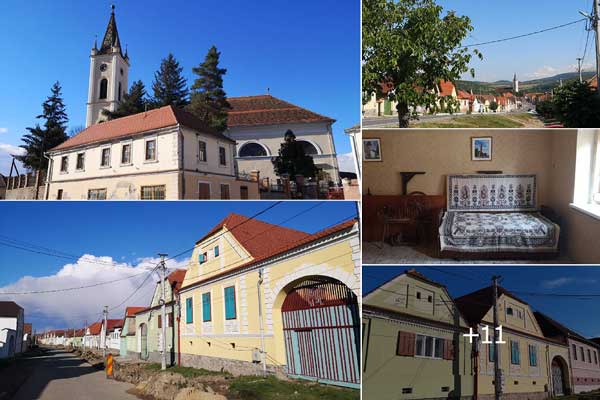
Großpold / Apoldu de Sus | Sibiu County
(28 October 2026)
X
(28 October 2026)
The village of Großpold, in Romanian Apoldu de Sus, is located in the county of Sibiu and is one of the three so-called Landler villages in Transylvania.
The Landler were forced to leave their Austrian homeland in the 18th century due to their Protestant faith and settled mainly in three villages near Sibiu. They have preserved their language and traditional costumes to this day. In Großpold, the typical architecture of the houses has largely been preserved. The two other Landler villages are Neppendorf, in Romanian Turnisor, today incorporated into Sibiu, and Großau, in Romanian Cristian.
We would like to thank Mr. Frank Schleßmann for sending us these beautiful pictures and the corresponding text/explanation.

December | Evenings of song and Christmas spirit
(27 October 2026)
X
(27 October 2026)
Visit Baum Restaurant / Bistroteca and Pensiunea Kokel in Dumbrăveni, Sibiu County.
On December 18 and 19, Ghiță Munteanu will be waiting to delight you with his voice and live songs.
On December 23, the last day for Christmas preparations, you can experience Paula Hriscu, with her warm voice and the passion she puts into her songs.
On December 26, the second day of Christmas, celebrate together with Ovidiu Rusu, enjoy the company of all the other visitors, and listen to his songs.
📞 Details and reservations: +40 (0)758 668 645
More information: Baum Dumbrăveni & Pensiunea Kokel
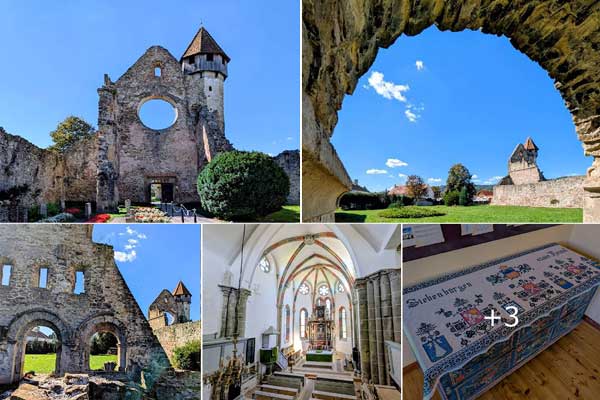
Cârța Monastery in Transylvania | Sibiu County
(27 October 2026)
X
(27 October 2026)
The Cârța Monastery (German: Kerz) is a former Cistercian (Benedictine) monastery in Transylvania, Romania.
It is located on the left bank of the Olt River, almost exactly halfway between the cities of Sibiu and Fagaras, and is today an Evangelical-Lutheran church.
The exact founding date of the Cârța Monastery (Latin: monasterium beatae Mariae virginis in Candelis de Kerch) is unknown. A Constance charter dated April 17, 1418, issued by Sigismund, King of Hungary, states vaguely that the monastery was founded, built, and endowed with rights and privileges by his predecessors. Cistercian documents from the 13th to 15th centuries, collected and analyzed by Leopold Janauschek, mention the founding year of the monastery as being around 1202–1203.
Beautiful pictures by Mr. Iercosan Marian from the end of September 2025.
Craiova Christmas Market 2026 / 2027
(24 October 2026)
X
(24 October 2026)
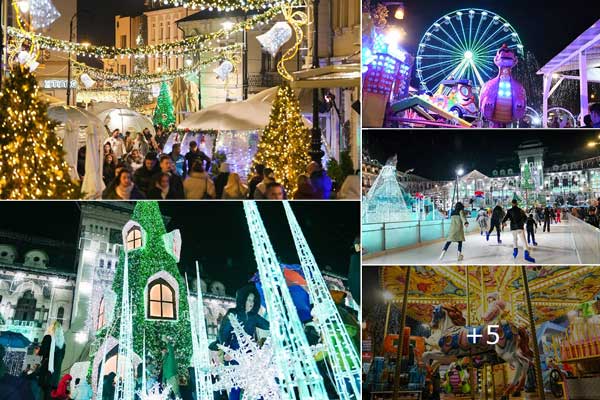
On November 13, the time has come again, and the first major Christmas markets in Romania will open their gates. As every year, the cities of Craiova and Sibiu (Hermannstadt) are among the first to take part.
More than two million lights, a Ferris wheel, an ice rink, a carousel, and many traditional products were featured at the Christmas market in Craiova (pictures from previous years). This year, too, the markets are looking forward to welcoming visitors... above all with lots and lots of Christmas atmosphere 🎄🥰
An overview of many Christmas markets in Romania can be found on our website under “Destinations”. The link can also be found with each picture.
Craiova is the county capital of Dolj County, in the historic region of Oltenia.
We would like to thank Târgul de Crăciun Craiova for allowing us to use these wonderful pictures.
Hermannstadt / Sibiu | Piata Mare / Grand Square
(22 October 2026)
X
(22 October 2026)
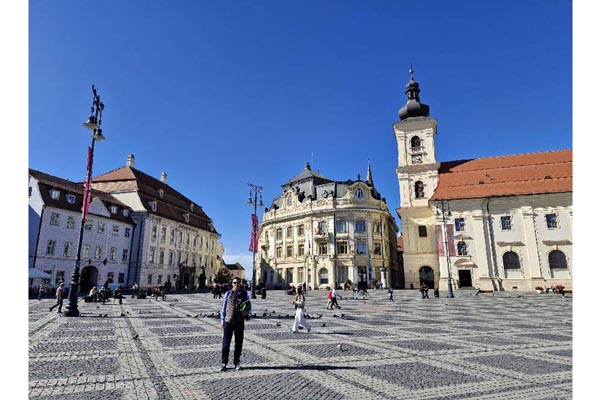
Piata Mare, the central main square in Sibiu, literally translates as “Grand Square”, but is known in German as “Großer Ring”.
Numerous historic buildings are located on and around the square, including Brukenthal Palace, home to the Brukenthal Museum; Casa Hecht, a historic town house with valuable medieval and Renaissance architecture; the Council Tower, dating from the 13th century; the magnificent Baroque Church of the Holy Trinity, built in 1733; and many others.
We would like to thank Mr Frank Schleßmann for this wonderful picture, taken on October 1, 2026.
Făgăraș Fortress | Brașov County
(21 October 2026)
X
(21 October 2026)
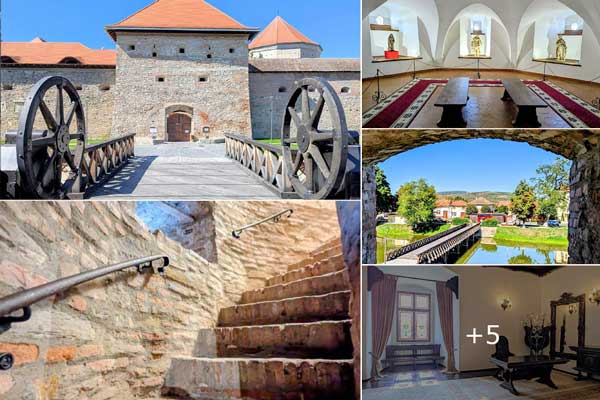
The city of Făgăraș lies on the route from Sibiu to Brașov. At the end of the 12th century, the town’s fortress was still only a wooden fortification; in the 14th century, it was expanded into a stone fortress.
The fortress houses a museum, which can be visited along with the fortification itself. The “Saint John the Baptist” Cathedral / Church is located directly next to the fortress.
Wonderful pictures taken by Mr Iercosan Marian at the end of September 2025.
The fortress houses a museum, which can be visited along with the fortification itself. The “Saint John the Baptist” Cathedral / Church is located directly next to the fortress.
Wonderful pictures taken by Mr Iercosan Marian at the end of September 2025.
Christmas Markets in Romania | Start Planning Now
(20 October 2026)
X
(20 October 2026)
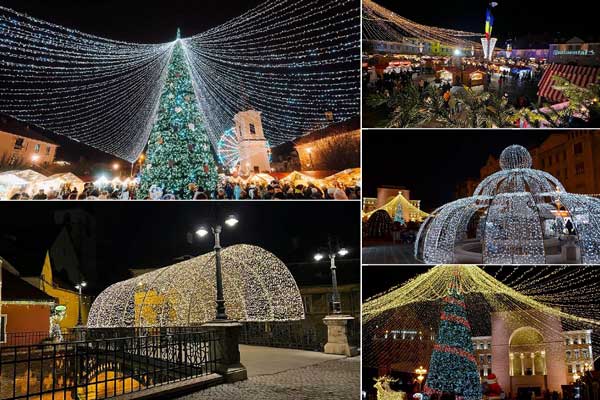
Planning is beginning, and some Christmas markets have already announced their opening hours. We are keeping track for you and will regularly provide comprehensive information about the most beautiful Christmas markets in Romania.
https://urlaub-in-rumänien.de/de/uir/weihnachtsmaerkte-in-rumaenien/
🎄 Christmas Markets in Romania 2026/2027 (selection)
Craiova | November 13, 2026 – January 3, 2027
Sibiu / Hermannstadt | November 13, 2026 – January 3, 2027
Bucharest | November 29, 2026 – December 28, 2027
Further dates for Cluj-Napoca, Târgu Mureș, Timișoara, Oradea, Brașov / Kronstadt, Piatra Neamț, and many others will follow shortly, or can already be found on our website.
Pictures: Christmas markets in Târgu Mureș, Timișoara, and Sibiu / Hermannstadt from previous years
Wurmloch / Valea Viilor | Sibiu County
(20 October 2026)
X
(20 October 2026)
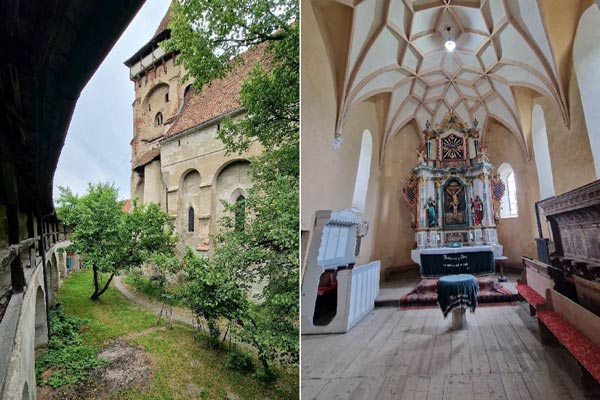
Valea Viilor, originally called Vorumloc (in the Transylvanian Saxon dialect) / Wurmloch (in German), was probably first mentioned in a document under the Hungarian name Baromlak in 1224 (possibly also in 1305).
The Transylvanian Saxon serf village, initially owned by nobles, later managed to join the Mediaș Seat and thereby gain its freedom. Until 1964, the village was known in Romania by the German-derived name Vorumloc, after which it was renamed “Valea Viilor” (meaning “Valley of the Vineyards” in German).
In 1850, Germans accounted for more than 65% of the population, and in 1977 for more than 50%. Today, only approximately 1–2% of the inhabitants are German.
Pictures: early June 2026
Făgăraș Fortress | Brașov County
(20 October 2026)
X
(20 October 2026)
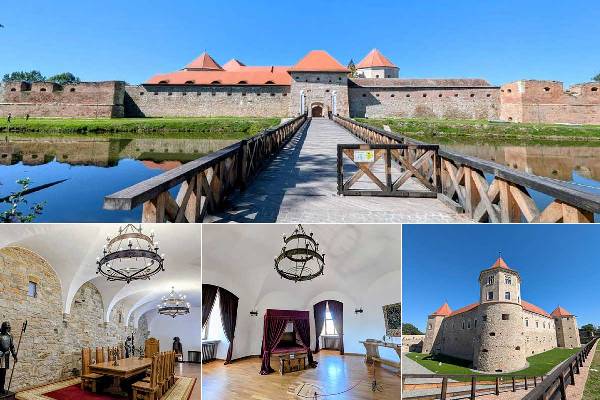
On the way from Sibiu to Brașov lies the town of Făgăraș. At the end of the 12th century the town's fortress was only a wooden fortification, which was expanded into a stone fortress in the 14th century.
The fortress houses a museum, which—like the fortress itself—can be visited. Directly next to the fortress is the cathedral / church Sfantul Ioan Botezatorul.
Beautiful pictures by Mr. Iercosan Marian from a few days ago (end of September 2025).
The fortress houses a museum, which—like the fortress itself—can be visited. Directly next to the fortress is the cathedral / church Sfantul Ioan Botezatorul.
Beautiful pictures by Mr. Iercosan Marian from a few days ago (end of September 2025).
Hermannstadt / Sibiu
(19 October 2026)
X
(19 October 2026)
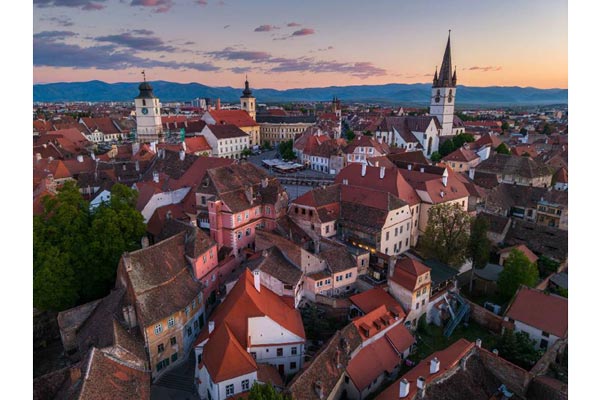
Sibiu (Hermannstadt in German) from above. On the right is the Evangelical City Parish Church, on the far left the Council Tower, and between them the Small Square (Piața Mică), which ends at the bottom right / in the foreground with the so-called “Bridge of Lies”.
Transfagarasan | Sibiu County
(19 October 2026)
X
(19 October 2026)
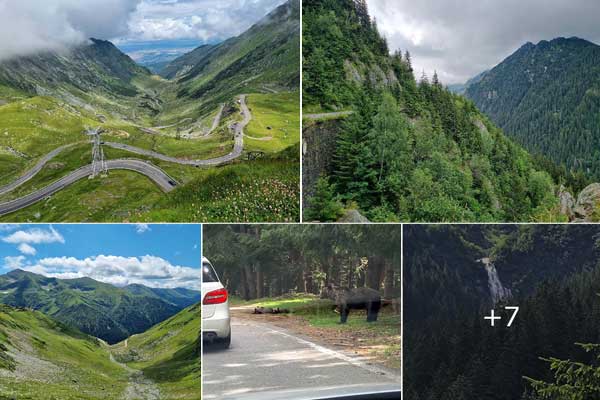
Alongside the Transalpina, the Transfăgărășan is one of the most beautiful mountain roads in Romania and is usually open from mid-June until October.
In summer, during the summer holidays, and especially at weekends, the road can be somewhat “crowded” 😅, partly because it is a cool destination for excursions when temperatures in the valley are high, as it reaches elevations of more than 2,000 metres.
P.S.: At present (October 19), it is snowing / there is snow from an altitude of 1,600 metres.
We would like to thank Mr Dietmar Parakenings for sending us these pictures from the end of July 2026.
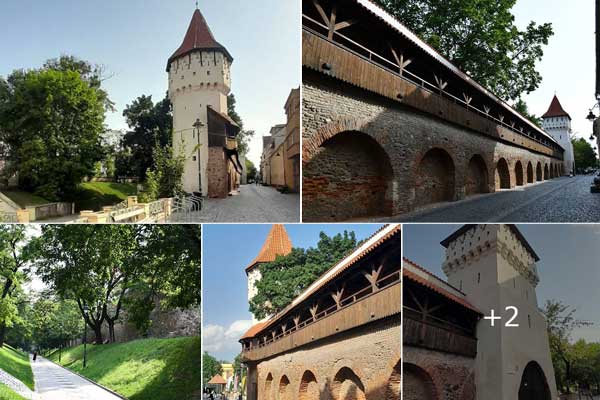
Sibiu / Hermannstadt / Nagyszeben
(17 October 2026)
X
(17 October 2026)
Pictures from July of a previous year from Sibiu (Hermannstadt), located in the historical region of Transylvania in the heart of Romania.
The old town and the fortress walls were built by Saxon settlers (the Transylvanian Saxons) in the 12th and 13th centuries and are still preserved in many of their original parts today.
The old town and the fortress walls were built by Saxon settlers (the Transylvanian Saxons) in the 12th and 13th centuries and are still preserved in many of their original parts today.
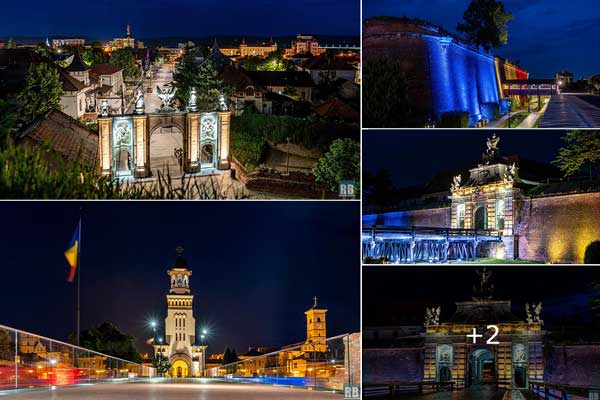
Alba Iulia | Alba Carolina Fortress
(17 October 2026)
X
(17 October 2026)
The Alba Carolina Citadel in Alba Iulia (Karlsburg) was built between 1715 and 1738 under the rule of Emperor Charles VI as a fortification with seven bastions.
It served the Habsburgs as a strategic defense point along the military border with the Ottoman Empire. Alba Iulia is located near the highway on the route to or from Sibiu (Hermannstadt). A visit is definitely worthwhile.
We thank photographer Rene Benner ( facebook.com/rene.benner.1 ) for sending these beautiful images. Thank you!
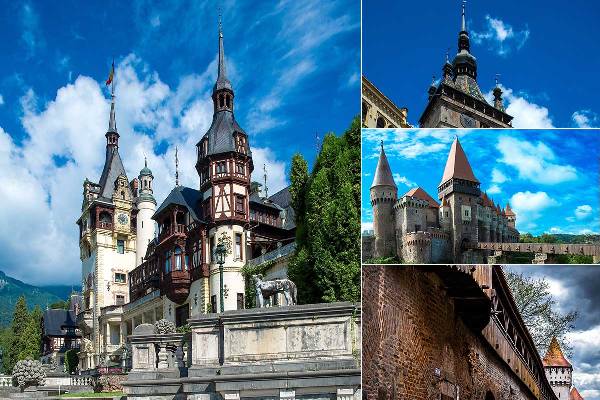
Highlights of Transylvania / Siebenbürgen
(16 October 2026)
X
(16 October 2026)
Peles Castle in Prahova County, the city of Sighisoara in Mures County, Corvin Castle in Hunedoara County, and the city of Sibiu (Hermannstadt).
https://urlaub-in-rumänien.de | https://welcome-to-romania.com
https://urlaub-in-rumänien.de | https://welcome-to-romania.com
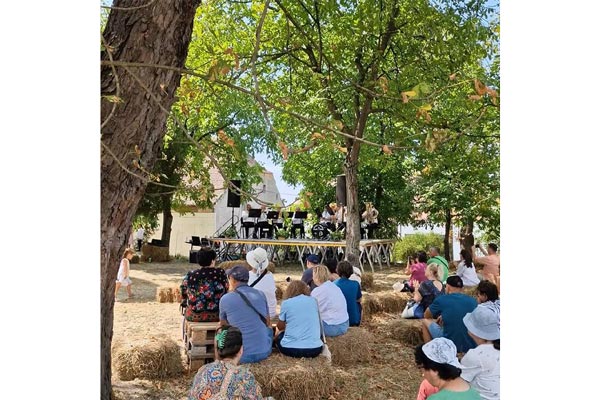
We remember... the Tuberose Festival in Hoghilag, at the beginning of August 2026
(15 October 2026)
X
(15 October 2026)
*The tuberose is a strongly scented bulbous plant from the agave subfamily. In Transylvania, the village of Hoghilag (Hockendorf in German), in Sibiu County, is particularly famous as the “home of the tuberose”. The cultivation of these fragrant flowers goes back to the Transylvanian Saxons 😍😍🇷🇴
Video
Video
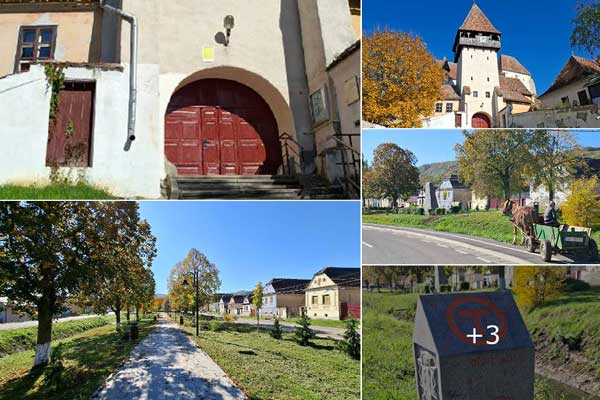
Bazna commune / fortified church in autumn | Sibiu County
(14 October 2026)
X
(14 October 2026)
Pictures from yesterday (16.10.2025) from Bazna (German: Baaßen or Baassen, Transylvanian Saxon: Baußen or Boassen, Hungarian: Bazna or Felsőbajom), located in the historical region of Siebenbürgen / Transylvania.
The commune is situated in the Kokel valley in the north of Sibiu County, about 15 kilometers northwest of the town of Medias and about 70 kilometers north of the county capital Sibiu / Hermannstadt.
King Stephen V (King of Hungary from 1270 to 1272) gave the place to the son of Count Bozouch. In 1302, Baaßen was mentioned for the first time in a document. In 1359 it was referred to as a free commune of the "Königsboden", belonging to the Medias seat. The German colonists first settled on the hill at the back, and later the village developed in the front valley.
Thanks to dear Roland for the wonderful pictures from 16.10.2025 🥰
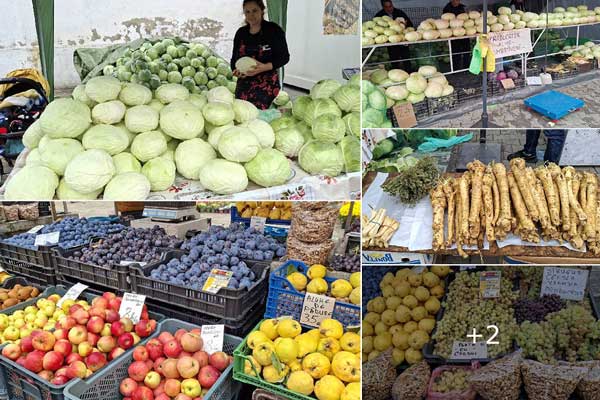
Autumn | Time for pickling and preserving
(12 October 2026)
X
(12 October 2026)
Autumnal offerings at the Central Market in Mediaș, Sibiu County.
The season for pickling and preparing cabbage has begun, so that the sauerkraut for sarmale will be just right by Christmas, ready to prepare sarmale and / or other festive delicacies 🥰
Text and pictures from our dear Roland, today, live from Mediaș. Thank you!
The season for pickling and preparing cabbage has begun, so that the sauerkraut for sarmale will be just right by Christmas, ready to prepare sarmale and / or other festive delicacies 🥰
Text and pictures from our dear Roland, today, live from Mediaș. Thank you!
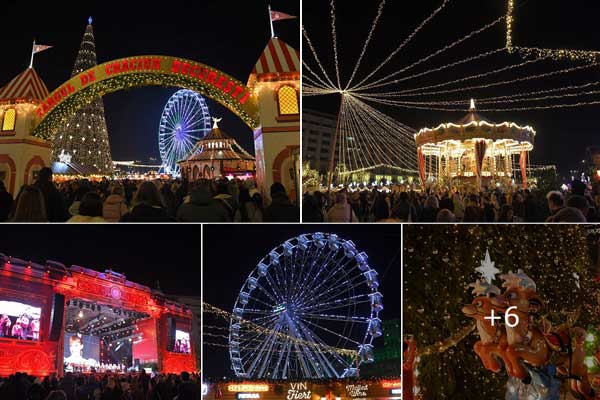
One month to go | Christmas markets in Romania 🎄
(12 October 2026)
X
(12 October 2026)
Tomorrow, in one month, the first Christmas markets in Romania (Craiova, Sibiu) will already open... almost like the gingerbread in supermarkets in August 😅🙈 But then again, when you read the daily news, you can never start getting into the Christmas spirit too early 🥰
Pictures from last year’s Christmas market in Bucharest. Anyone who does not let themselves be enchanted here is, in the best sense of the word, a “Grinch” 😅😊 It is a huge Christmas party right in the heart of Bucharest, directly in front of the Palace of Parliament.
You can find all the dates and plenty of information on our website. The link is included with each picture, or you can search Google for “Urlaub Rumänien Weihnachtsmärkte”. Romania’s Christmas markets are looking forward to welcoming you 🎄🎅
https://urlaub-in-rumänien.de/de/uir/weihnachtsmaerkte-in-rumaenien/
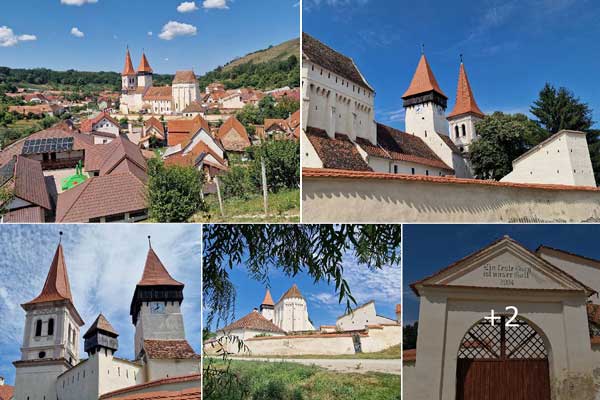
Fortified church in Kleinschelken / Seica Mica | Transylvania
(11 October 2026)
X
(11 October 2026)
Kleinschelken (in Romanian Seica Mica, in Hungarian Kissely) is a commune in Sibiu County, in the historic region of Transylvania. It consists of the main village of Kleinschelken and the village of Sorostin (in German Schorsten).
The fortified church of Kleinschelken is actually a Gothic complex dating from the 14th century, which was gradually developed into a fortified church by the Transylvanian Saxons. The church is impressive with its three-aisled pillar basilica, fortified bell tower, and distinctive well courtyard.
Around 1280, the first settlement was founded in the middle of the ridge between Kleinschelken and Kleinkopisch. In 1318, the name “Kleinschelken” was first mentioned in a document. In 1494, Kleinschelken became a market town, and in 1576 it was granted the right to exercise capital jurisdiction by the voivode of Transylvania.
Pictures: early August 2026
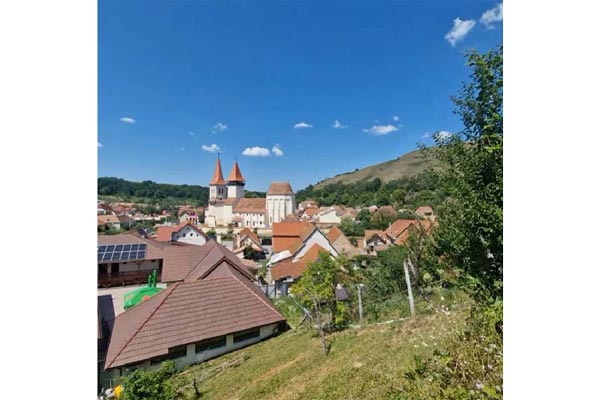
Above the rooftops of Șeica Mică / Kleinschelken, Sibiu County, in Transylvania 😍
(10 October 2026)
X
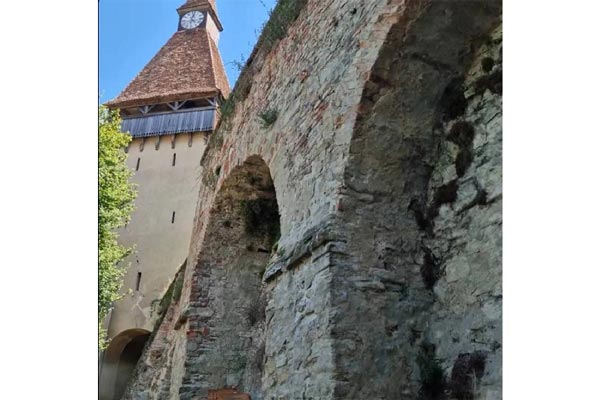
Biertan | The village and fortified church
(09 October 2026)
X
(09 October 2026)
It is located in the commune of Biertan (Birthälm in German, Berethalom in Hungarian), in Sibiu County, Transylvania. Biertan is one of the earliest Saxon settlements and was already mentioned in a document in 1398 (other sources give the year 1402) 😍😍
Video
Video

Biertan | Village and fortified church / church fortress | Sibiu County
(09 October 2026)
X
(09 October 2026)
The church / fortified church is located in the commune of Biertan (German: Birthälm, Hungarian: Berethalom) in Sibiu County, Transylvania.
Biertan is part of the first German-Saxon settlements and was already mentioned in documents in 1398 (other sources: 1402).
Like every Saxon settlement, it stands out for its row of houses arranged around a central square, above which the imposing fortified church rises. Between 1572 and 1867, Biertan was the seat of the Saxon episcopate (bishop’s seat of the Evangelical Church A.B.), which favored the development of one of the largest rural communities in Transylvania around this fortified church. It is a medieval and architectural treasure in Romania, definitely worth a visit.
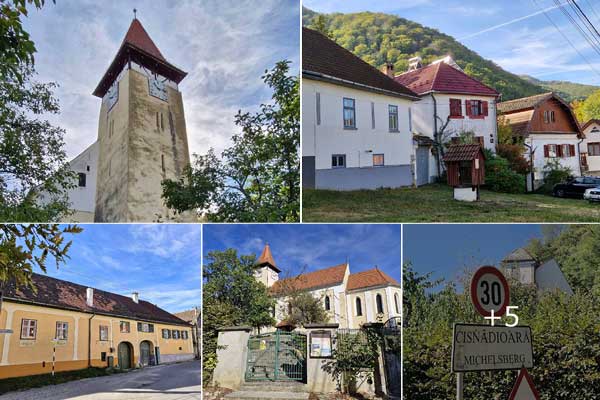
Michelsberg in Transylvania
(05 October 2026)
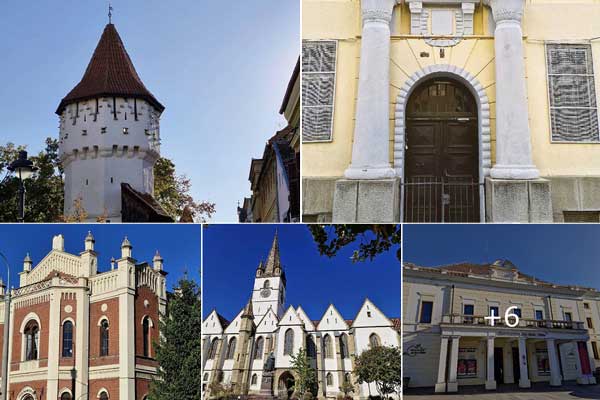
Sibiu / Hermannstadt / Nagyszeben | The Day Before Yesterday (Part 3 of 3)
(03 October 2026)
X
(03 October 2026)
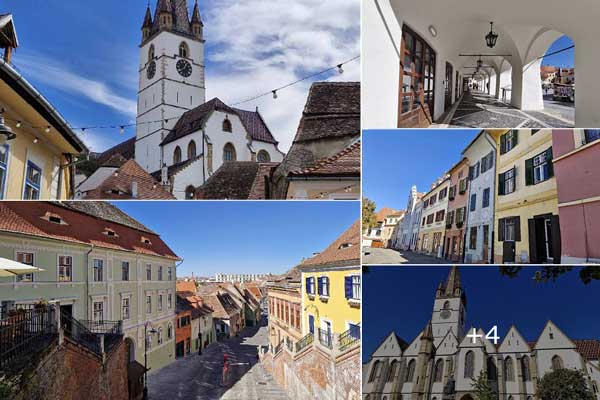
Pictures from October 1, 2026, from Hermannstadt / Sibiu, located in the historic region of Transylvania, in the heart of Romania.
The first German settlers probably reached the area around 1147. The city was first mentioned in a document in 1191. From 1223, the Latin name “Villa Hermanni” is documented, and from 1241, the German equivalent “Hermannstorf”.
The old town and the fortification walls were built by Saxon settlers—the Transylvanian Saxons—in the 12th and 13th centuries and have largely been preserved in their original form to this day.
We would like to thank Mr Frank Schleßmann for sending us these wonderful pictures (October 1, 2026).
Sibiu / Hermannstadt / Nagyszeben | Yesterday (Part 1 of 3)
(02 October 2026)
X
(02 October 2026)
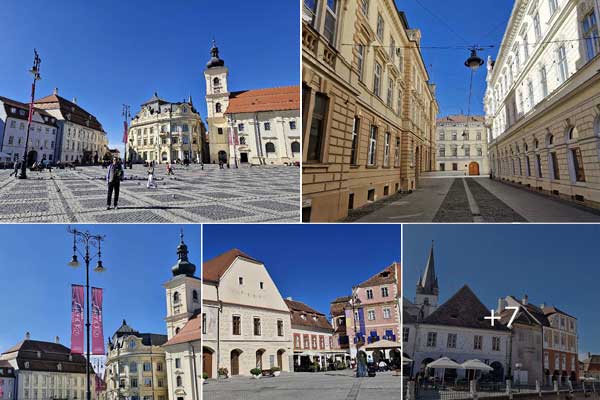
Pictures from October 1, 2026, from Sibiu / Hermannstadt, located in the historic region of Transylvania, in the heart of Romania.
The first German settlers probably reached the area around 1147. The city was first mentioned in a document in 1191. From 1223, the Latin name “Villa Hermanni” is documented, and from 1241, the German equivalent “Hermannstorf”.
The old town and the fortification walls were built by Saxon settlers—the Transylvanian Saxons—in the 12th and 13th centuries and have largely been preserved in their original form to this day.
We would like to thank Mr Frank Schleßmann for sending us these wonderful pictures (October 1, 2026).
Sibiu / Hermannstadt / Nagyszeben | Yesterday (Part 2 of 3)
(02 October 2026)
X
(02 October 2026)
Pictures from October 1, 2026, from Sibiu / Hermannstadt, located in the historic region of Transylvania, in the heart of Romania.
The first German settlers probably reached the area around 1147. The city was first mentioned in a document in 1191. From 1223, the Latin name “Villa Hermanni” is documented, and from 1241, the German equivalent “Hermannstorf”.
The old town and the fortification walls were built by Saxon settlers—the Transylvanian Saxons—in the 12th and 13th centuries and have largely been preserved in their original form to this day.
We would like to thank Mr Frank Schleßmann for sending us these wonderful pictures (October 1, 2026).
The first German settlers probably reached the area around 1147. The city was first mentioned in a document in 1191. From 1223, the Latin name “Villa Hermanni” is documented, and from 1241, the German equivalent “Hermannstorf”.
The old town and the fortification walls were built by Saxon settlers—the Transylvanian Saxons—in the 12th and 13th centuries and have largely been preserved in their original form to this day.
We would like to thank Mr Frank Schleßmann for sending us these wonderful pictures (October 1, 2026).
A motorcycle trip | Bazna fortified church | Sibiu County
(29 September 2026)
X
(29 September 2026)
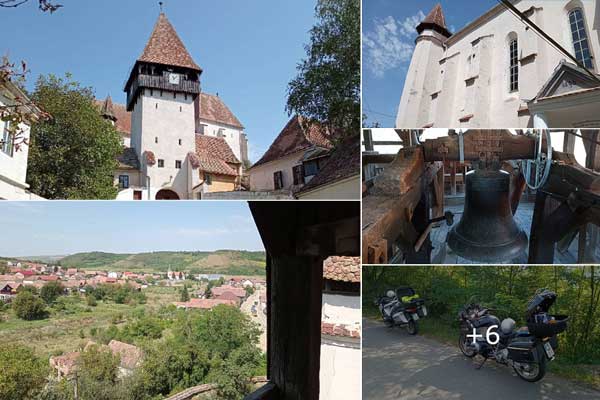
In July / August 2023, we followed "Schnuff" and his motorcycle friends on their journey through Romania, with wonderful pictures and experiences.
Here the municipality of Bazna (in German Baaßen or Baassen, Transylvanian Saxon Baußen, Hungarian Bazna or Felsobajom) in the district of Sibiu in Transylvania (pictures mid-August 2023).
The Protestant fortified church in Baußen was built in the 14th century and rebuilt in the 16th century. Today, the church and part of the community center are listed buildings.
Wurmloch / Valea Viilor in Sibiu County
(29 September 2026)
X
(29 September 2026)
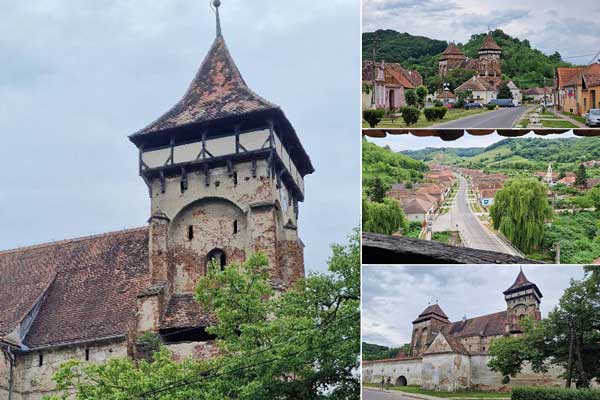
Valea Viilor, originally called Vorumloc (in the Transylvanian Saxon dialect) / Wurmloch (in German), was probably first mentioned in a document under the Hungarian name Baromlak in 1224 (possibly also in 1305).
The Transylvanian Saxon serf village, initially owned by nobles, later managed to join the Mediaș Seat and thereby gain its freedom. Until 1964, the village was known in Romania by the German-derived name Vorumloc, after which it was renamed “Valea Viilor” (meaning “Valley of the Vineyards” in German).
In 1850, Germans accounted for more than 65% of the population, and in 1977 for more than 50%. Today, only approximately 1–2% of the inhabitants are German.


