
Click on the button below to go to the offer of this German-speaking host.
County: Cluj
Telefon: +40 (0)772 091 769
Address: Pădurenii (PLZ: 407413), Strada Principală Nr. 8, County Cluj, Romania
Email: padureni.house@gmail.com

Our UiR database: What you can also visit and explore nearby ...
Cluj-Napoca | A city that never sleeps (Part 1 of 2)
(13 October 2026)
X

(13 October 2026)
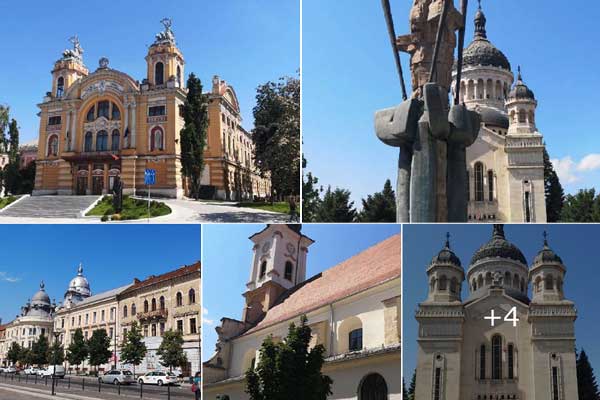
Cluj-Napoca (German: Klausenburg, Hungarian: Kolozsvár) in summer, (probably*) the second largest city in Romania and the capital of Cluj County in Transylvania.
Cluj-Napoca, with about 400,000* inhabitants, is considered the unofficial capital of the Transylvania region. The city has universities, a vibrant nightlife, and many buildings from the times of Hungarian and Saxon rule. Around the main square, Piata Unirii, are the Gothic St. Michael’s Church and an equestrian statue of King Matthias Corvinus, who lived in the 15th century. The baroque Banffy Palace is now a museum displaying Romanian art.
Cluj-Napoca has an international airport and is located in the northwest of Romania.
We thank Mr. Frank Schleßmann for sending these beautiful pictures (photos from summer 2023) and for granting permission to use them.
* It could also be Iasi, Timisoara or Constanta. Unfortunately, there are no exact figures.
Cluj-Napoca, with about 400,000* inhabitants, is considered the unofficial capital of the Transylvania region. The city has universities, a vibrant nightlife, and many buildings from the times of Hungarian and Saxon rule. Around the main square, Piata Unirii, are the Gothic St. Michael’s Church and an equestrian statue of King Matthias Corvinus, who lived in the 15th century. The baroque Banffy Palace is now a museum displaying Romanian art.
Cluj-Napoca has an international airport and is located in the northwest of Romania.
We thank Mr. Frank Schleßmann for sending these beautiful pictures (photos from summer 2023) and for granting permission to use them.
* It could also be Iasi, Timisoara or Constanta. Unfortunately, there are no exact figures.
Cluj-Napoca | A city that never sleeps (Part 2 of 2)
(13 October 2026)
X
(13 October 2026)
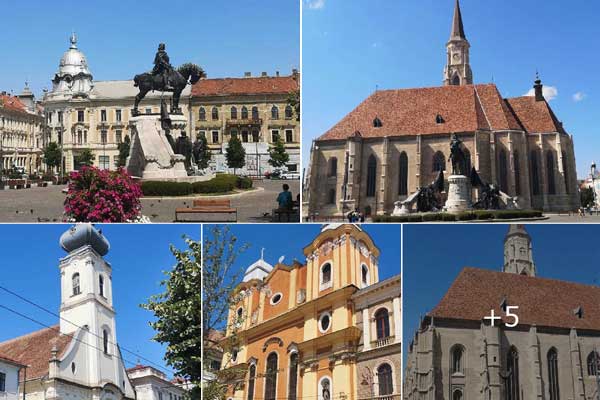
Cluj-Napoca (German: Klausenburg, Hungarian: Kolozsvár) in summer, (probably*) the second largest city in Romania and the capital of Cluj County in Transylvania.
Cluj-Napoca, with about 400,000* inhabitants, is considered the unofficial capital of the Transylvania region. The city has universities, a vibrant nightlife, and many buildings from the times of Hungarian and Saxon rule. Around the main square, Piata Unirii, are the Gothic St. Michael’s Church and an equestrian statue of King Matthias Corvinus, who lived in the 15th century. The baroque Banffy Palace is now a museum displaying Romanian art.
Cluj-Napoca has an international airport and is located in the northwest of Romania.
We thank Mr. Frank Schleßmann for sending these beautiful pictures (photos from summer 2023) and for granting permission to use them.
* It could also be Iasi, Timisoara or Constanta. Unfortunately, there are no exact figures.
Cluj-Napoca, with about 400,000* inhabitants, is considered the unofficial capital of the Transylvania region. The city has universities, a vibrant nightlife, and many buildings from the times of Hungarian and Saxon rule. Around the main square, Piata Unirii, are the Gothic St. Michael’s Church and an equestrian statue of King Matthias Corvinus, who lived in the 15th century. The baroque Banffy Palace is now a museum displaying Romanian art.
Cluj-Napoca has an international airport and is located in the northwest of Romania.
We thank Mr. Frank Schleßmann for sending these beautiful pictures (photos from summer 2023) and for granting permission to use them.
* It could also be Iasi, Timisoara or Constanta. Unfortunately, there are no exact figures.
Christmas Markets in Romania | Start Planning Now
(02 October 2026)
X
(02 October 2026)
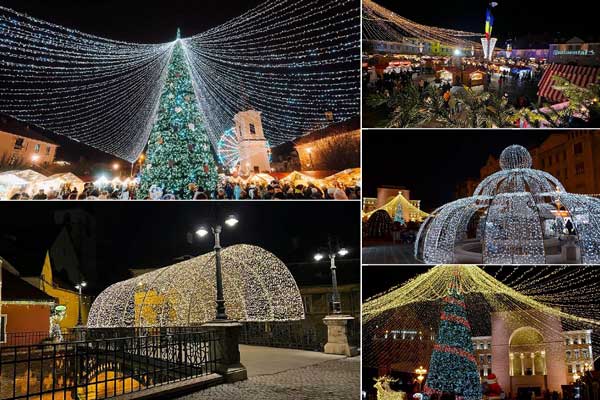
Planning is beginning, and some Christmas markets have already announced their opening hours. We are keeping track for you and will regularly provide comprehensive information about the most beautiful Christmas markets in Romania.
https://urlaub-in-rumänien.de/de/uir/weihnachtsmaerkte-in-rumaenien/
🎄 Christmas Markets in Romania 2026/2027 (selection)
Craiova | November 13, 2026 – January 3, 2027
Sibiu / Hermannstadt | November 13, 2026 – January 3, 2027
Bucharest | November 29, 2026 – December 28, 2027
Further dates for Cluj-Napoca, Târgu Mureș, Timișoara, Oradea, Brașov / Kronstadt, Piatra Neamț, and many others will follow shortly, or can already be found on our website.
Pictures: Christmas markets in Târgu Mureș, Timișoara, and Sibiu / Hermannstadt from previous years
https://urlaub-in-rumänien.de/de/uir/weihnachtsmaerkte-in-rumaenien/
🎄 Christmas Markets in Romania 2026/2027 (selection)
Craiova | November 13, 2026 – January 3, 2027
Sibiu / Hermannstadt | November 13, 2026 – January 3, 2027
Bucharest | November 29, 2026 – December 28, 2027
Further dates for Cluj-Napoca, Târgu Mureș, Timișoara, Oradea, Brașov / Kronstadt, Piatra Neamț, and many others will follow shortly, or can already be found on our website.
Pictures: Christmas markets in Târgu Mureș, Timișoara, and Sibiu / Hermannstadt from previous years
Salt mine / Salina Turda | Cluj County
(27 September 2026)
X
(27 September 2026)
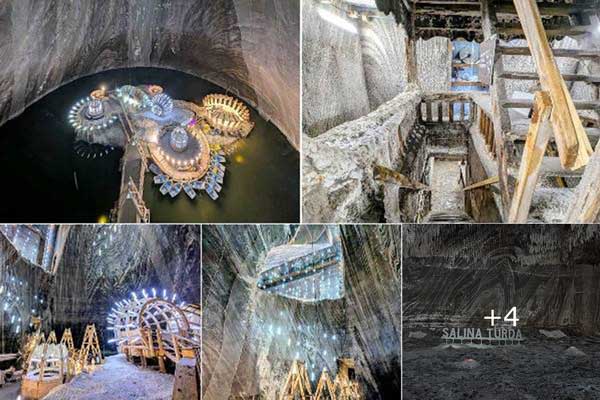
The Turda Salt Mine is a true museum of the history of salt mining.
It is located in the town of Turda, which is situated in Cluj County. The temperature in the salt mine remains constant at 10–12 °C. It is one of the oldest and best-known salt mines in Transylvania / Romania.
Beautiful pictures by Mr. Iercosan Marian from a few days ago (end of September 2025). Thank you for these 🥰
It is located in the town of Turda, which is situated in Cluj County. The temperature in the salt mine remains constant at 10–12 °C. It is one of the oldest and best-known salt mines in Transylvania / Romania.
Beautiful pictures by Mr. Iercosan Marian from a few days ago (end of September 2025). Thank you for these 🥰
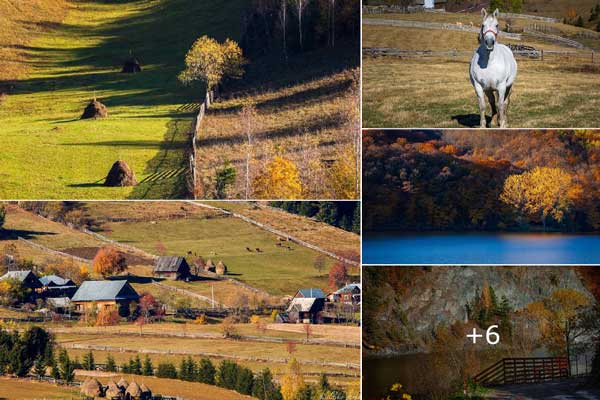
Autumn impressions in Cluj-Napoca
(25 September 2026)
X
(25 September 2026)
The villages of Maguri-Racatau, Marisel, Maguri, and the Tarnita Reservoir in Cluj County provide us with a glimpse of the enchanting autumn in Romania.
The lake has an area of 215 hectares, a length of almost 9 km, a maximum water depth of 70 meters, and is a popular destination for tourists and residents of the city of Cluj-Napoca.
We thank Mrs. Farkas Ildiko (facebook.com/farkas.ildiko.75) for her permission to use these beautiful pictures.
The lake has an area of 215 hectares, a length of almost 9 km, a maximum water depth of 70 meters, and is a popular destination for tourists and residents of the city of Cluj-Napoca.
We thank Mrs. Farkas Ildiko (facebook.com/farkas.ildiko.75) for her permission to use these beautiful pictures.
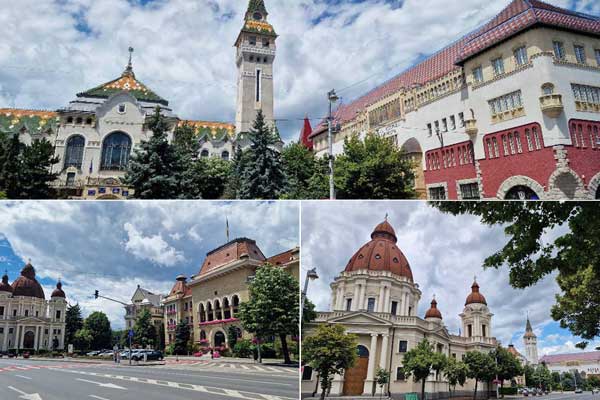
Targu Mures | Mures County
(20 September 2026)
X
(20 September 2026)
Pictures from mid-June 2026 from Târgu Mureș (Marosvásárhely in Hungarian and Neumarkt am Mieresch in German).
The city was first mentioned in a document in the year 1300. It is located on the Mureș River (Mieresch in German, Maros in Hungarian), on the route between Brașov and Cluj-Napoca, or vice versa.
The city was first mentioned in a document in the year 1300. It is located on the Mureș River (Mieresch in German, Maros in Hungarian), on the route between Brașov and Cluj-Napoca, or vice versa.
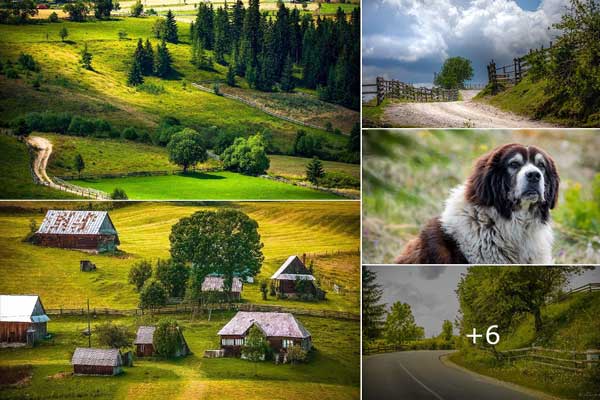
Beautiful landscapes in Cluj County
(19 September 2026)
X
(19 September 2026)
Cheile Somesului Rece National Park, near the municipalities of Maguri Racatau and Maguri-Marisel, is located west of Cluj-Napoca in northwestern Romania.
https://xn--willkommen-in-rumnien-m2b.de/ | https://welcome-to-romania.com
We thank Mrs Farkas Ildiko ( facebook.com/farkas.ildiko.75 ) for the permission to use these pictures.
https://xn--willkommen-in-rumnien-m2b.de/ | https://welcome-to-romania.com
We thank Mrs Farkas Ildiko ( facebook.com/farkas.ildiko.75 ) for the permission to use these pictures.
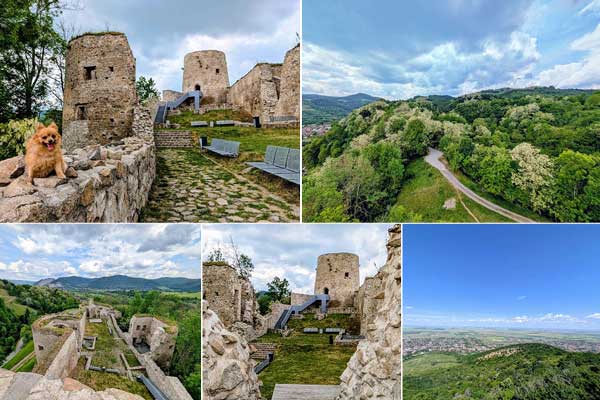
Bologa Fortress | Cluj County
(14 September 2026)
X
(14 September 2026)
Bologa Fortress (Hungarian: Sebesvár) is an important medieval ruin in Cluj County, Transylvania. The site also contains the ancient Roman auxiliary fort Resculum, built around 110 AD.
The fortress in Poieni commune once secured the strategically important valley of the Sebes River and was part of the Dacian Limes.
We thank Mr. Iercosan Marian for these beautiful pictures from early June 2026.
The fortress in Poieni commune once secured the strategically important valley of the Sebes River and was part of the Dacian Limes.
We thank Mr. Iercosan Marian for these beautiful pictures from early June 2026.
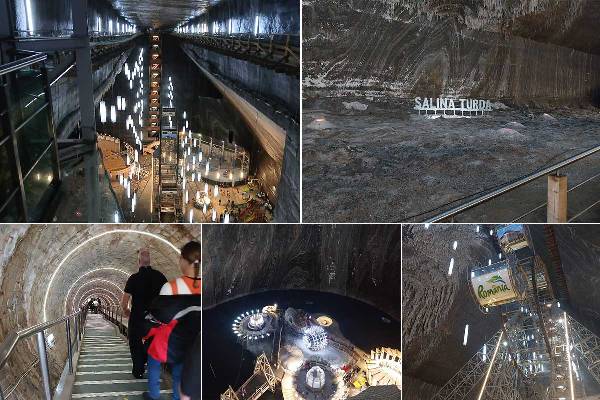
Turda Salt Mine | Cluj County
(12 September 2026)
X
(12 September 2026)
The Turda Salt Mine is a true museum of the history of salt mining. It is located in the town of Turda, in Cluj County. The temperature in the salt mine remains constant at around 10–12 °C. It is one of the oldest and best‑known salt mines in Transylvania / Romania.
More salt mines and info in Romania:
https://willkommen-in-rumänien.de/#Salzbergwerke
We thank Mr. Andreas Hainbach for these beautiful pictures from his Romania tour at the end of July 2025 / beginning of August 2025. Many thanks 🥰
More salt mines and info in Romania:
https://willkommen-in-rumänien.de/#Salzbergwerke
We thank Mr. Andreas Hainbach for these beautiful pictures from his Romania tour at the end of July 2025 / beginning of August 2025. Many thanks 🥰
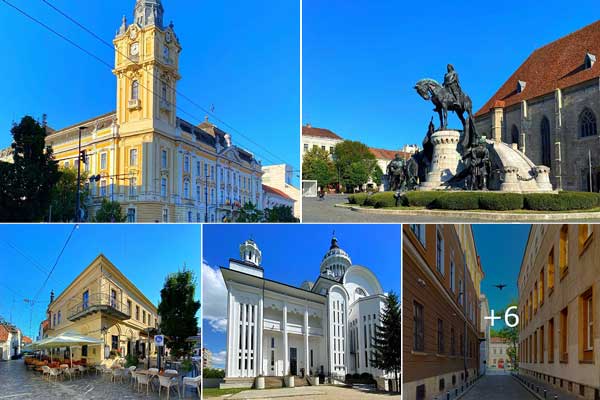
Cluj-Napoca (Part 2 of 2)
(11 September 2026)
X
(11 September 2026)
Pictures from Cluj-Napoca (Klausenburg in German, Kolozsvár in Hungarian) from the beginning of August 2026. The city is (probably*) the second-largest city in Romania and the capital of Cluj County in Transylvania.
https://urlaub-in-rumänien.de | https://welcome-to-romania.com
With approximately 400,000 to 450,000 inhabitants, Cluj-Napoca is the unofficial capital of the Transylvania region. It has universities, a lively nightlife, and many buildings dating from the periods of Hungarian and Saxon rule. Around Union Square are the Gothic St. Michael’s Church and an equestrian statue of King Matthias Corvinus, who lived in the 15th century. The Baroque Bánffy Palace is now a museum displaying Romanian art.
We thank Mr Liviu Jakob (facebook.com/leaveu.jacobs) for the pictures (July 2026) and for granting permission to use them. Thank you 🥰
https://urlaub-in-rumänien.de | https://welcome-to-romania.com
With approximately 400,000 to 450,000 inhabitants, Cluj-Napoca is the unofficial capital of the Transylvania region. It has universities, a lively nightlife, and many buildings dating from the periods of Hungarian and Saxon rule. Around Union Square are the Gothic St. Michael’s Church and an equestrian statue of King Matthias Corvinus, who lived in the 15th century. The Baroque Bánffy Palace is now a museum displaying Romanian art.
We thank Mr Liviu Jakob (facebook.com/leaveu.jacobs) for the pictures (July 2026) and for granting permission to use them. Thank you 🥰
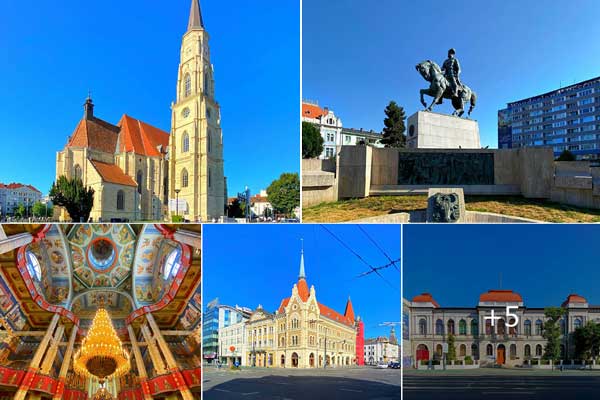
Cluj-Napoca (Part 1 of 2)
(10 September 2026)
X
(10 September 2026)
Pictures from Cluj-Napoca (Klausenburg in German, Kolozsvár in Hungarian) from the beginning of August 2026. The city is (probably*) the second-largest city in Romania and the capital of Cluj County in Transylvania.
https://urlaub-in-rumänien.de | https://welcome-to-romania.com
With approximately 400,000 to 450,000 inhabitants, Cluj-Napoca is the unofficial capital of the Transylvania region. It has universities, a lively nightlife, and many buildings dating from the periods of Hungarian and Saxon rule. Around Union Square are the Gothic St. Michael’s Church and an equestrian statue of King Matthias Corvinus, who lived in the 15th century. The Baroque Bánffy Palace is now a museum displaying Romanian art.
We thank Mr Liviu Jakob (facebook.com/leaveu.jacobs) for the pictures (July 2026) and for granting permission to use them. Thank you 🥰
https://urlaub-in-rumänien.de | https://welcome-to-romania.com
With approximately 400,000 to 450,000 inhabitants, Cluj-Napoca is the unofficial capital of the Transylvania region. It has universities, a lively nightlife, and many buildings dating from the periods of Hungarian and Saxon rule. Around Union Square are the Gothic St. Michael’s Church and an equestrian statue of King Matthias Corvinus, who lived in the 15th century. The Baroque Bánffy Palace is now a museum displaying Romanian art.
We thank Mr Liviu Jakob (facebook.com/leaveu.jacobs) for the pictures (July 2026) and for granting permission to use them. Thank you 🥰
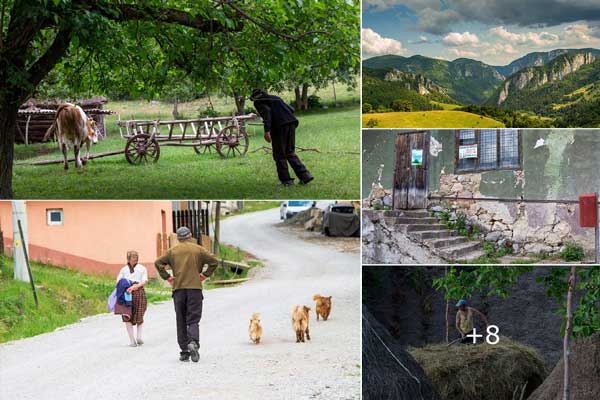
Rural life in the Apuseni mountains
(06 September 2026)
X
(06 September 2026)
Wildly romantic for some, hard work with many hardships for others—in the Apuseni Mountains, both come together. Who is happier... everyone must decide for themselves. More does not always mean better... at least not when it comes to one’s own satisfaction.
The Apuseni Mountains are a mountain range in western Romania. They reach peak heights of almost 1,850 meters (highest peak: Cucurbăta Mare at 1,849 meters) and form the northern section of the western Romanian Carpathians. The range has an almost circular shape with a diameter of 130 to 150 km, is bordered by the Mureș, Someș, and Barcău rivers, and is located in the counties of Arad, Bihor, Cluj, Alba, and Hunedoara.
We thank the photographer Gerd Deeken for allowing us to use these pictures.
The Apuseni Mountains are a mountain range in western Romania. They reach peak heights of almost 1,850 meters (highest peak: Cucurbăta Mare at 1,849 meters) and form the northern section of the western Romanian Carpathians. The range has an almost circular shape with a diameter of 130 to 150 km, is bordered by the Mureș, Someș, and Barcău rivers, and is located in the counties of Arad, Bihor, Cluj, Alba, and Hunedoara.
We thank the photographer Gerd Deeken for allowing us to use these pictures.
Targu Mures in the evening hours
(29 August 2026)
X
(29 August 2026)
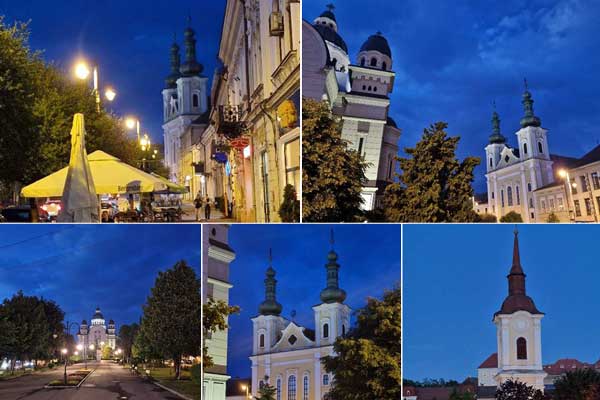
The city of Targu Mures (Hungarian: Marosvásárhely, German: Neumarkt am Mieresch), first documented in the year 1300, is located on the Mures River (German: Mieresch, Hungarian: Maros), on the route between Brasov and Cluj-Napoca.
Targu Mures was founded by the Székely people. The city was first mentioned in historical records in 1300 as Forum Siculorum. The history of the city, like that of all Transylvania, was shaped by the Kingdom of Hungary, the Principality of Transylvania, and from the end of the 17th century by the Habsburg Monarchy, later Hungary, and then Romania.
Pictures: June 02, 2026
Targu Mures was founded by the Székely people. The city was first mentioned in historical records in 1300 as Forum Siculorum. The history of the city, like that of all Transylvania, was shaped by the Kingdom of Hungary, the Principality of Transylvania, and from the end of the 17th century by the Habsburg Monarchy, later Hungary, and then Romania.
Pictures: June 02, 2026
Cluj-Napoca | August 2026
(12 August 2026)
X
(12 August 2026)
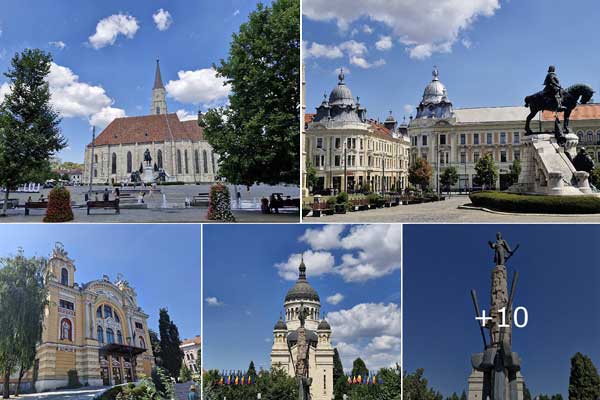
Pictures from Cluj-Napoca (Klausenburg in German, Kolozsvar in Hungarian) from early August 2026. The city is (probably*) the second-largest city in Romania and the capital of Cluj County in Transylvania.
With approximately 400,000 to 450,000 inhabitants, Cluj-Napoca is the unofficial capital of the Transylvania region. It has universities, a lively nightlife, and many buildings dating from the periods of Hungarian and Saxon rule. Around the main square, Piata Unirii, are the Gothic St. Michael’s Church and an equestrian statue of King Matthias Corvinus, who lived in the 15th century. The Baroque Banffy Palace is now a museum displaying Romanian art.
We thank Mr. Frank Schleßmann for sending these pictures from early August 2026.
With approximately 400,000 to 450,000 inhabitants, Cluj-Napoca is the unofficial capital of the Transylvania region. It has universities, a lively nightlife, and many buildings dating from the periods of Hungarian and Saxon rule. Around the main square, Piata Unirii, are the Gothic St. Michael’s Church and an equestrian statue of King Matthias Corvinus, who lived in the 15th century. The Baroque Banffy Palace is now a museum displaying Romanian art.
We thank Mr. Frank Schleßmann for sending these pictures from early August 2026.
Cluj-Napoca | Impressions at the end of June
(23 July 2026)
X
(23 July 2026)
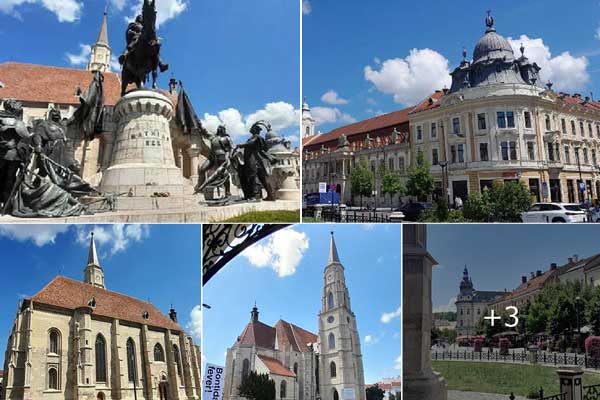
Pictures of Cluj-Napoca (in German Klausenburg, in Hungarian Kolozsvar) from June 29 and 30, 2024. The city is (likely*) the second-largest city in Romania and the capital of Cluj County in Transylvania.
With approximately 400,000 to 450,000 inhabitants, Cluj-Napoca is the unofficial capital of the Transylvania region. It features universities, a lively nightlife, and many buildings from the times of Hungarian and Saxon rule. Surrounding the main square, Piata Unirii, are the Gothic St. Michael's Church and an equestrian statue of King Matthias Corvinus, who lived in the 15th century. The Baroque Banffy Palace is now a museum showcasing Romanian art.
With approximately 400,000 to 450,000 inhabitants, Cluj-Napoca is the unofficial capital of the Transylvania region. It features universities, a lively nightlife, and many buildings from the times of Hungarian and Saxon rule. Surrounding the main square, Piata Unirii, are the Gothic St. Michael's Church and an equestrian statue of King Matthias Corvinus, who lived in the 15th century. The Baroque Banffy Palace is now a museum showcasing Romanian art.
With Organ & Saxophone | Transylvania Tour
(23 July 2026)
X
(23 July 2026)
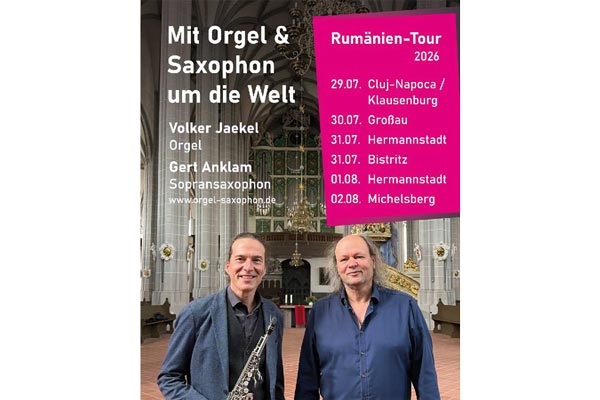
Starting on July 29 (Cluj-Napoca / Klausenburg) and July 30 (Cristian / Großau), the tour continues via Sibiu / Hermannstadt until August 2, with six concerts featuring organ and saxophone around the world—or, in this case, across Transylvania.
Exact dates, locations, and concert times are available at: https://www.orgel-saxophon.de/
Exact dates, locations, and concert times are available at: https://www.orgel-saxophon.de/
Targu Mures | Mures County
(20 July 2026)
X
(20 July 2026)
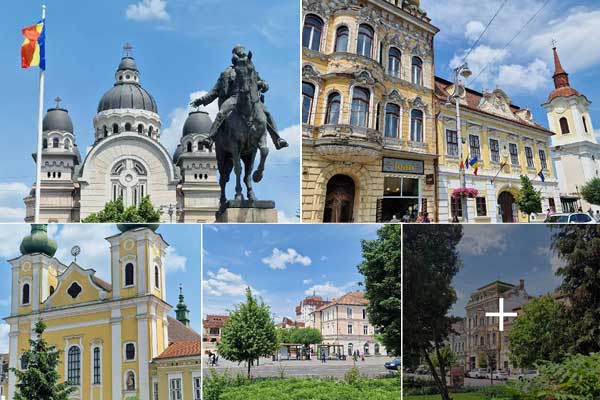
The city of Targu Mures (Hungarian: Marosvásárhely, German: Neumarkt am Mieresch), first documented in the year 1300, is located on the Mureș River (German: Mieresch, Hungarian: Maros), on the route between Brasov and Cluj-Napoca.
Targu Mures was founded by the Székelys. The city was first mentioned in historical records in 1300 as Forum Siculorum. The history of the city, like that of all Transylvania, was shaped by the Kingdom of Hungary, the Principality of Transylvania, and from the end of the 17th century by the Habsburg Monarchy, later Hungary, and then Romania.
Pictures: May 25, 2026
Targu Mures was founded by the Székelys. The city was first mentioned in historical records in 1300 as Forum Siculorum. The history of the city, like that of all Transylvania, was shaped by the Kingdom of Hungary, the Principality of Transylvania, and from the end of the 17th century by the Habsburg Monarchy, later Hungary, and then Romania.
Pictures: May 25, 2026
"Saint Basil the Great" Monastery | Cluj County
(10 July 2026)
X
(10 July 2026)
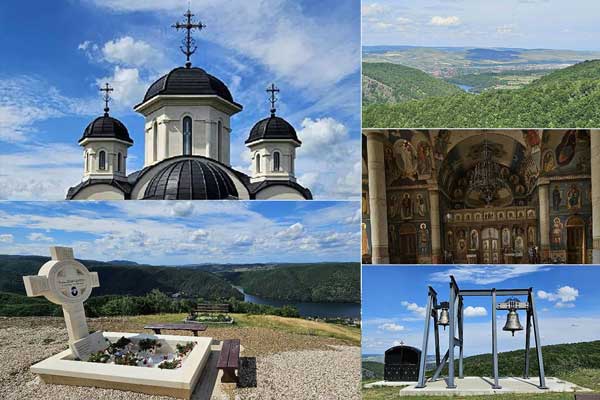
The Monastery of Saint Basil the Great is located near the city of Cluj-Napoca in Transylvania. It is picturesquely situated on a hill overlooking the Tarnița reservoir.
Basil of Caesarea (later called the Great) was an ascetic, bishop, and theologian, and one of the most prominent figures in late antique Christianity; he died around the year 346.
We thank Ms. Gina S. for these beautiful pictures from her current motorcycle trip through Romania.
Basil of Caesarea (later called the Great) was an ascetic, bishop, and theologian, and one of the most prominent figures in late antique Christianity; he died around the year 346.
We thank Ms. Gina S. for these beautiful pictures from her current motorcycle trip through Romania.
"Saint Basil the Great" Monastery | Cluj County
(10 July 2026)
X
(10 July 2026)
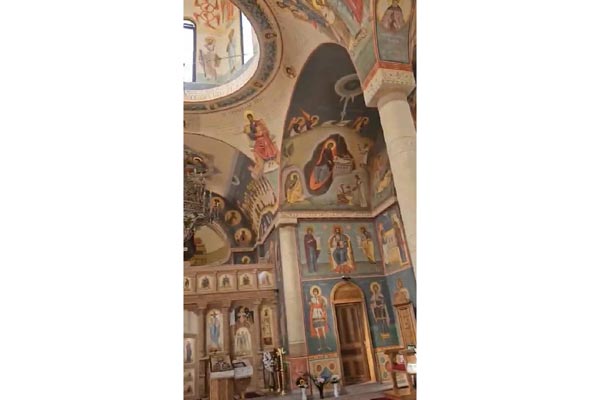
The Monastery of Saint Basil the Great is located near the city of Cluj-Napoca (Klausenburg) in Transylvania.
Thank you to Ms. Gina S. for the video.
Thank you to Ms. Gina S. for the video.
Bucharest, capital of Romania | Old Town / Lipscani
(03 July 2026)
X
(03 July 2026)
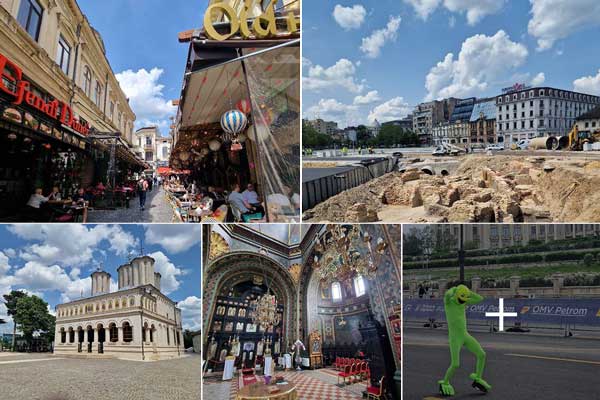
Pictures from early May 2026, a wonderfully warm day filled with many impressions. Construction is underway in many places, revealing much of the past (see the image of Piata Unirii); there are many historic buildings with deep history, but unfortunately also more and more places in need of renovation.
As a visitor, you should use taxis very, very carefully or not at all. Unfortunately, there are more and more drivers who are no longer trustworthy. A "special offer" without a meter for 3 km at 50 to 100 euros is becoming increasingly common. That is not good! Bolt is a good alternative (also because you see the cost BEFORE the ride), or you can walk or use public transport.
The historic buildings and especially the interiors of the churches / cathedrals are beautiful 😍 the old town is lively, very lively, and the restaurants are unfortunately adapting to rising energy prices 😅 0.5 liter beer for 34 Lei (about 7 euros) or 140 Lei (about 30 euros) for two traditional sausages, fries, a cola, and a beer. Bucharest has become (probably together with Cluj-Napoca) by far the most expensive hotspot in Romania!
In the evening and at night... the old town is increasingly turning into a party area. Clubs, table dancing, loud music, and many "offers". A trend that we (Urlaub in Rumänien) don’t really like, but... it is what it is!
Nevertheless, we would recommend everyone to visit Bucharest / the Old Town. Many impressions, lots of history, and many experiences. You shouldn’t miss Bucharest, if only for the green frogs that you can sometimes find dancing in front of Parliament (our picture) 😁🥰
As a visitor, you should use taxis very, very carefully or not at all. Unfortunately, there are more and more drivers who are no longer trustworthy. A "special offer" without a meter for 3 km at 50 to 100 euros is becoming increasingly common. That is not good! Bolt is a good alternative (also because you see the cost BEFORE the ride), or you can walk or use public transport.
The historic buildings and especially the interiors of the churches / cathedrals are beautiful 😍 the old town is lively, very lively, and the restaurants are unfortunately adapting to rising energy prices 😅 0.5 liter beer for 34 Lei (about 7 euros) or 140 Lei (about 30 euros) for two traditional sausages, fries, a cola, and a beer. Bucharest has become (probably together with Cluj-Napoca) by far the most expensive hotspot in Romania!
In the evening and at night... the old town is increasingly turning into a party area. Clubs, table dancing, loud music, and many "offers". A trend that we (Urlaub in Rumänien) don’t really like, but... it is what it is!
Nevertheless, we would recommend everyone to visit Bucharest / the Old Town. Many impressions, lots of history, and many experiences. You shouldn’t miss Bucharest, if only for the green frogs that you can sometimes find dancing in front of Parliament (our picture) 😁🥰
Cluj-Napoca | Impressions
(05 June 2026)
X
(05 June 2026)
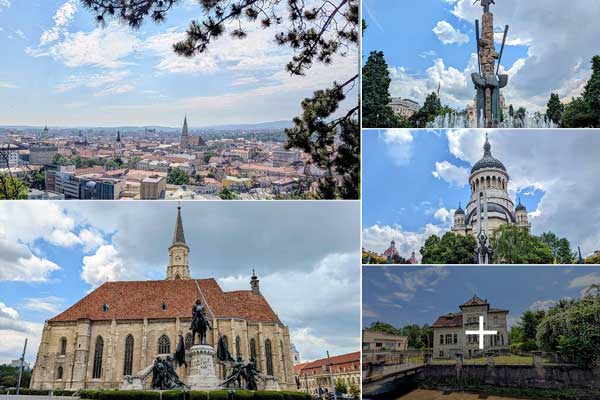
Beautiful pictures from Cluj-Napoca (German: Klausenburg, Hungarian: Kolozsvar) these days (early June 2026) from Mr. Iercosan Marian.
Cluj-Napoca is (probably*) the second-largest city in Romania and the capital of Cluj County in Transylvania. With about 350,000 to 500,000 inhabitants, it is the unofficial capital of the Transylvania region.
There are universities, a lively nightlife, and many buildings from the times of Hungarian and Saxon rule. Around the main square Piata Unirii are the Gothic St. Michael’s Church and an equestrian statue of King Matthias Corvinus, who lived in the 15th century. The Baroque Bánffy Palace is today a museum exhibiting Romanian art.
Cluj-Napoca is (probably*) the second-largest city in Romania and the capital of Cluj County in Transylvania. With about 350,000 to 500,000 inhabitants, it is the unofficial capital of the Transylvania region.
There are universities, a lively nightlife, and many buildings from the times of Hungarian and Saxon rule. Around the main square Piata Unirii are the Gothic St. Michael’s Church and an equestrian statue of King Matthias Corvinus, who lived in the 15th century. The Baroque Bánffy Palace is today a museum exhibiting Romanian art.
Targu Mures in the evening hours
(27 May 2026)
X
(27 May 2026)
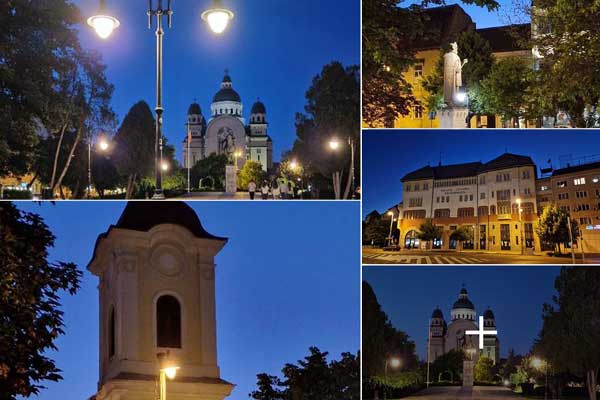
The city of Targu Mures (Hungarian: Marosvásárhely, German: Neumarkt am Mieresch), first documented in the year 1300, is located on the Mureș River (German: Mieresch, Hungarian: Maros), on the route between Brasov and Cluj-Napoca.
Targu Mures was founded by the Székelys. The city was first mentioned in historical records in 1300 as Forum Siculorum. The history of the city, like that of all Transylvania, was shaped by the Kingdom of Hungary, the Principality of Transylvania, and from the end of the 17th century by the Habsburg Monarchy, later Hungary, and then Romania.
Pictures: May 26, 2026
Targu Mures was founded by the Székelys. The city was first mentioned in historical records in 1300 as Forum Siculorum. The history of the city, like that of all Transylvania, was shaped by the Kingdom of Hungary, the Principality of Transylvania, and from the end of the 17th century by the Habsburg Monarchy, later Hungary, and then Romania.
Pictures: May 26, 2026
Turda Salt Mine | Cluj County
(26 May 2026)
X
(26 May 2026)
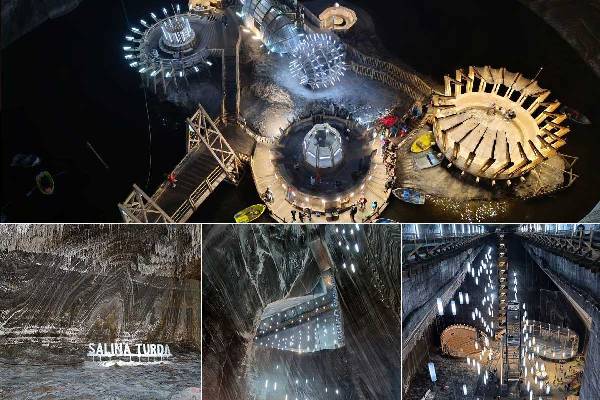
A weekend from a year ago and we are happy to be able to show these pictures. The Turda Salt Mine is located in the town of the same name in Cluj County, southeast of the city of Cluj-Napoca.
We thank Mr. Camille Feller and his wife, Katja Feller, for sending these wonderful pictures and for allowing us to use them 😊 Thank you 🥰
We thank Mr. Camille Feller and his wife, Katja Feller, for sending these wonderful pictures and for allowing us to use them 😊 Thank you 🥰
Holiday 2026: Alba Iulia / Karlsburg
(09 May 2026)
X
(09 May 2026)
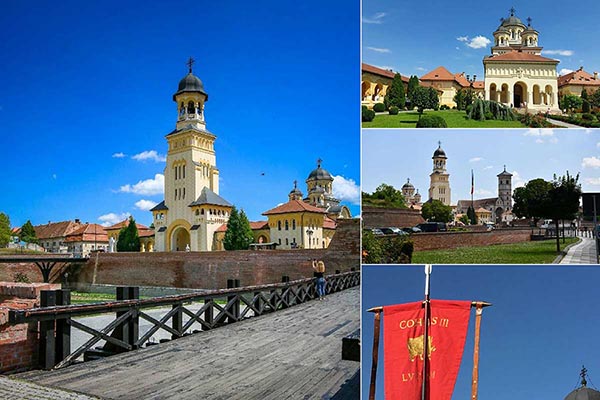
On the way from Timisoara to Sibiu or from Cluj Napoca to Sibiu (both on the highway), or of course also in the opposite direction, you should not miss a detour to Alba Iulia.
https://urlaub-in-rumänien.de/en/uir/destinations-romania-alba-iulia/
https://urlaub-in-rumänien.de/en/uir/destinations-romania-alba-iulia/
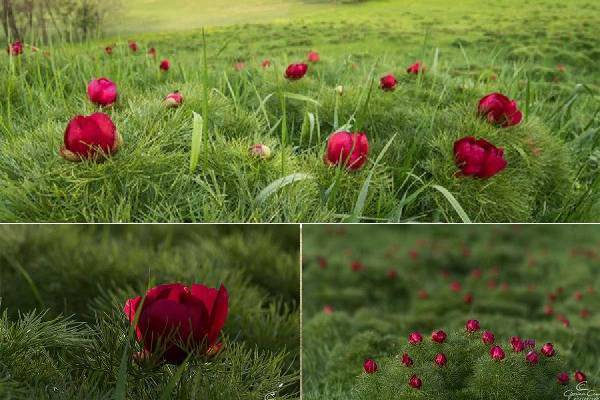
The Steppe Peonies | Mures County
(28 April 2026)
X
(28 April 2026)
The first flowers of the steppe peonies (Paeonia tenuifolia) usually bloom in May in the nature reserve in Zau de Campie (photos: 2022).
The nature reserve is located on the territory of the municipalities of Zau de Campie and Valea Larga in Mures County, near the border with Cluj County.
Text/image source: https://destinatiaanului.ro/
Photos: Ciprian Cenan
The nature reserve is located on the territory of the municipalities of Zau de Campie and Valea Larga in Mures County, near the border with Cluj County.
Text/image source: https://destinatiaanului.ro/
Photos: Ciprian Cenan
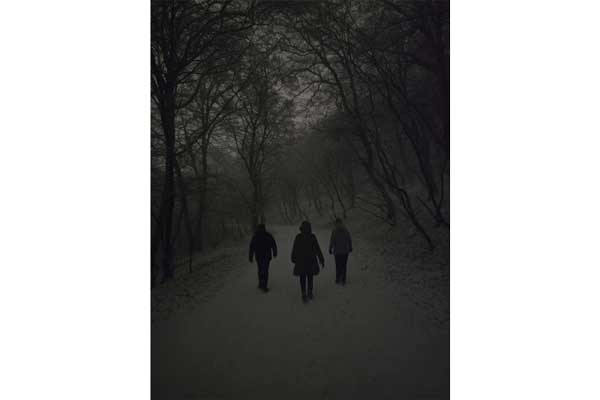
Romania's haunted forest Hoia Baciu
(19 April 2026)
X
(19 April 2026)
Just outside the city of Cluj-Napoca (German: Klausenburg), in northwestern Romania, lies the Hoia Baciu forest, one of the most visited forests in the world, also known as the Romanian Bermuda Triangle.
And why? Over the decades, there have been hundreds of reports of paranormal activity here, ranging from mobile network interference, sightings of light orbs and ghosts, to people and animals disappearing and returning years later.
The Hoia Baciu forest takes its name from a shepherd of the region who disappeared in the forest with his flock of sheep. Another story tells of a five-year-old girl who went into the forest and returned five years later wearing the same clothes and looking not a day older. Many stories center around a clearing where nothing grows, even though scientists have examined the soil and found that everything is in order.
Whether you are looking for the supernatural or just an interesting hike, this forest is a fascinating and unique place and definitely worth a visit.
We thank Mr. Sebastian Mallach for his daring 😅 walk in the forest and for sending this impressive picture 😊👍
And why? Over the decades, there have been hundreds of reports of paranormal activity here, ranging from mobile network interference, sightings of light orbs and ghosts, to people and animals disappearing and returning years later.
The Hoia Baciu forest takes its name from a shepherd of the region who disappeared in the forest with his flock of sheep. Another story tells of a five-year-old girl who went into the forest and returned five years later wearing the same clothes and looking not a day older. Many stories center around a clearing where nothing grows, even though scientists have examined the soil and found that everything is in order.
Whether you are looking for the supernatural or just an interesting hike, this forest is a fascinating and unique place and definitely worth a visit.
We thank Mr. Sebastian Mallach for his daring 😅 walk in the forest and for sending this impressive picture 😊👍
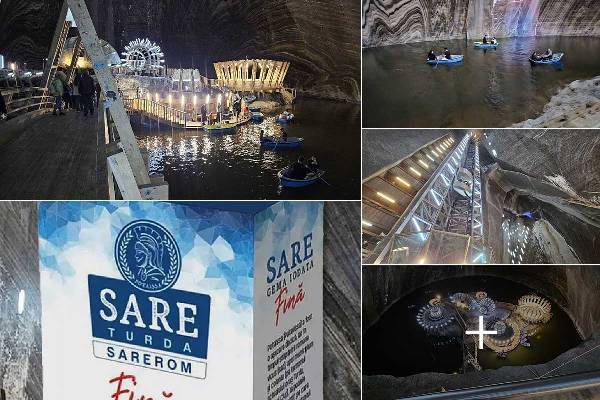
Turda Salt Mine | Cluj County
(17 April 2026)
X
(17 April 2026)
Always a pleasure: The Turda Salt Mine is a true museum of the history of salt mining. It is located in the city of Turda, in Cluj County.
The temperature in the salt mine is constantly between 10-12 degrees. It is one of the oldest and most famous salt mines in Transylvania / Romania.
And if you want to take home a souvenir after your visit, just visit a (Romanian) Kaufland. The 1 kg package of Turda salt costs about 2 lei (40 cents), price as of November 2025.
More salt mines and information in Romania:
https://willkommen-in-rumänien.de/#Salzbergwerke
We thank Tom & Helga for these beautiful pictures from their Romania tour in September and October 2024. Many thanks!
The temperature in the salt mine is constantly between 10-12 degrees. It is one of the oldest and most famous salt mines in Transylvania / Romania.
And if you want to take home a souvenir after your visit, just visit a (Romanian) Kaufland. The 1 kg package of Turda salt costs about 2 lei (40 cents), price as of November 2025.
More salt mines and information in Romania:
https://willkommen-in-rumänien.de/#Salzbergwerke
We thank Tom & Helga for these beautiful pictures from their Romania tour in September and October 2024. Many thanks!
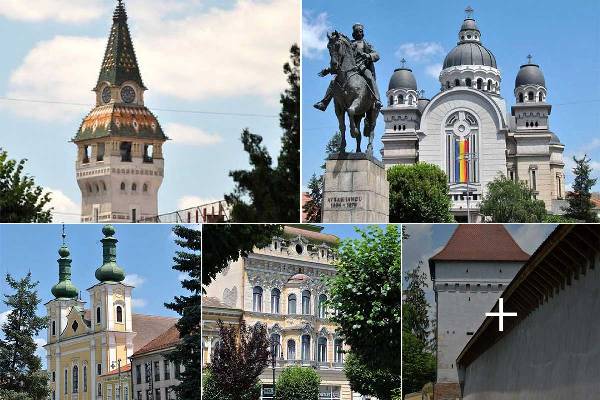
Targu Mures | Mures County
(17 April 2026)
X
(17 April 2026)
The city of Targu Mures (in Hungarian Marosvasarhely and in German Neumarkt am Mieresch), first mentioned in documents in 1300, is located on the Mures River (in German Mieresch, in Hungarian Maros) on the route from Brasov to Cluj-Napoca.
https://xn--willkommen-in-rumnien-m2b.de/ | https://xn--urlaub-in-rumnien-2qb.de/
https://xn--willkommen-in-rumnien-m2b.de/ | https://xn--urlaub-in-rumnien-2qb.de/
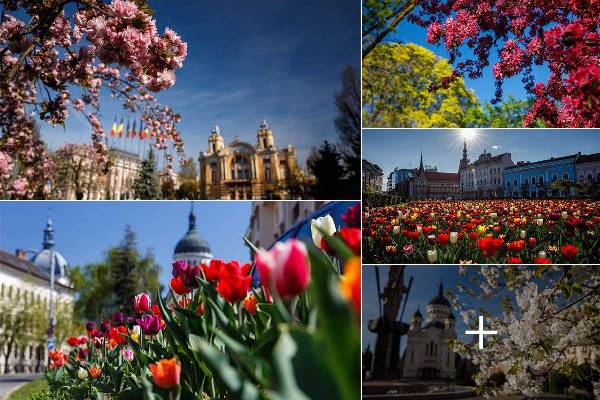
Cluj-Napoca spring - a sea of flowers
(15 April 2026)
X
(15 April 2026)
Spring is special in its own way in every city, every place, and every country. Beautiful pictures of spring in Cluj-Napoca in northwestern Romania from previous years.
https://urlaub-in-rumänien.de | https://welcome-to-romania.com
https://urlaub-in-rumänien.de | https://welcome-to-romania.com
Cluj-Napoca | Impressions
(03 April 2026)
X
(03 April 2026)
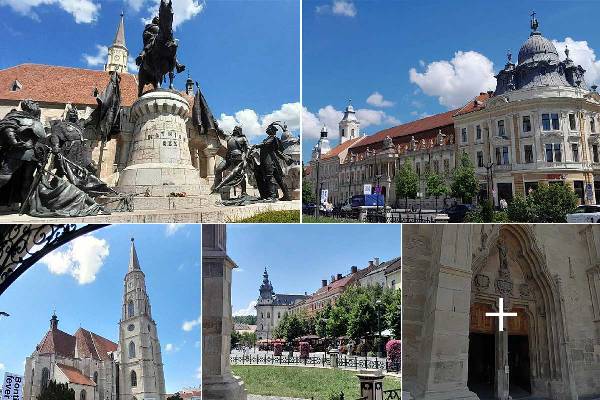
Pictures from Cluj-Napoca (German: Klausenburg, Hungarian: Kolozsvar) from June 29 and 30. The city is (probably*) the second largest city in Romania and the capital of Cluj County in Transylvania.
Cluj-Napoca, with about 400,000 inhabitants, is considered the unofficial capital of the Transylvania region. The city has universities, a vibrant nightlife, and many buildings from the times of Hungarian and Saxon rule. Around the main square, Piata Unirii, are the Gothic St. Michael’s Church and an equestrian statue of King Matthias Corvinus, who lived in the 15th century. The baroque Banffy Palace is now a museum displaying Romanian art.
Cluj-Napoca, with about 400,000 inhabitants, is considered the unofficial capital of the Transylvania region. The city has universities, a vibrant nightlife, and many buildings from the times of Hungarian and Saxon rule. Around the main square, Piata Unirii, are the Gothic St. Michael’s Church and an equestrian statue of King Matthias Corvinus, who lived in the 15th century. The baroque Banffy Palace is now a museum displaying Romanian art.


