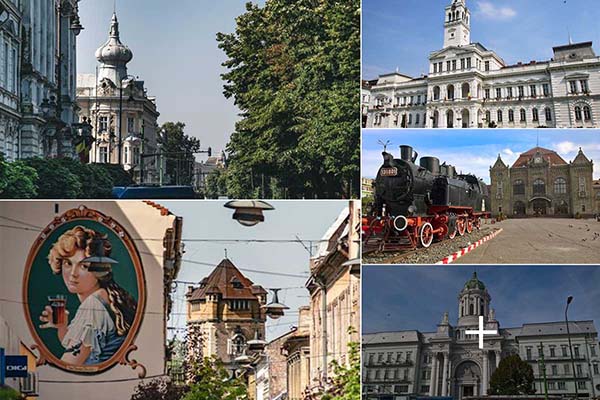
Arad County (Cities: Arad, Pecica, Sântana)
Arad is a Romanian county in Kreischgebiet and Banat with the capital of Arad district. Its usual abbreviation and license plate are AR. Arad County borders Bihor County to the north and northeast, Alba County to the east, Hunedoara County to the east and southeast, Timiș County to the south and Hungary to the west.


Complexul Muzeul Arad | Arad City
[More about] [Map]
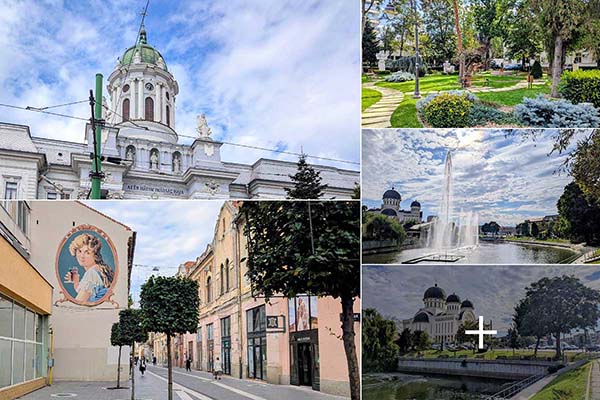
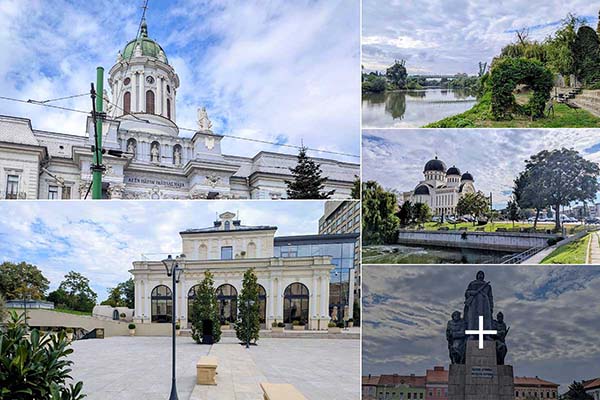
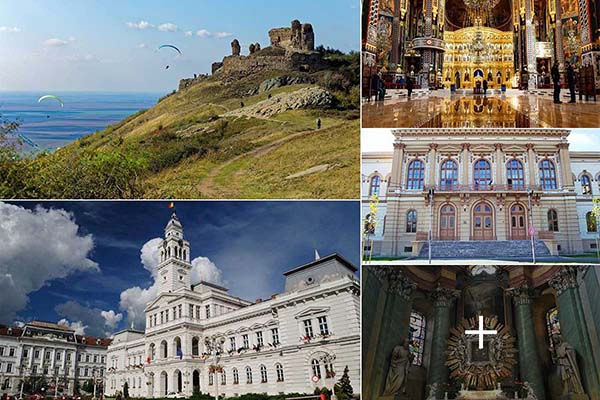
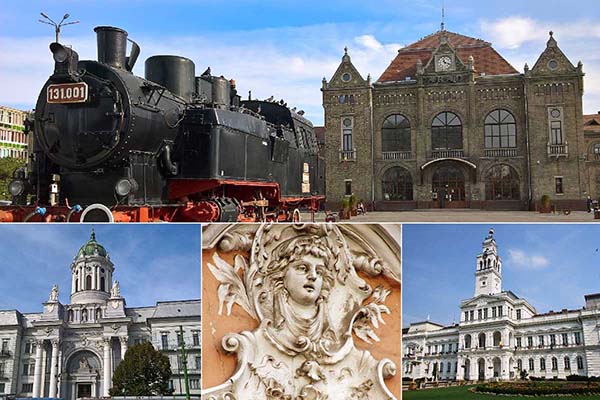
The museum in Arad was opened in 1893 as an exhibition of relics from the 1848 revolution, displayed in the lobby on the second floor of the State Theater. Two decades later, the museum was moved to the newly built Cultural Palace (1913), alongside the city’s philharmonic orchestra and library. Here, alongside the old relic exhibition, exhibition halls for the archaeology and medieval history collection as well as a European art gallery have been set up artă europeană.
Photo credit: Nelu Scripciuc

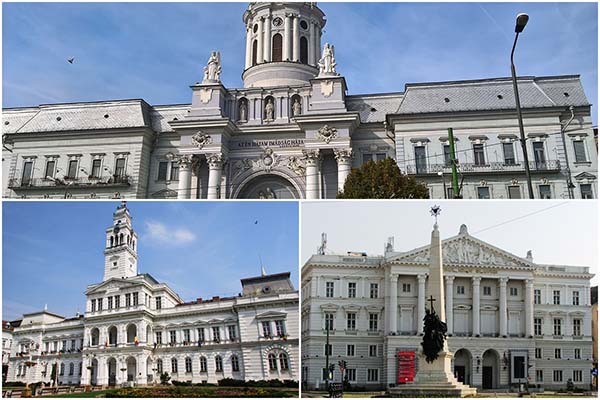
Administrative Palace | Arad City
[More about] [Map]
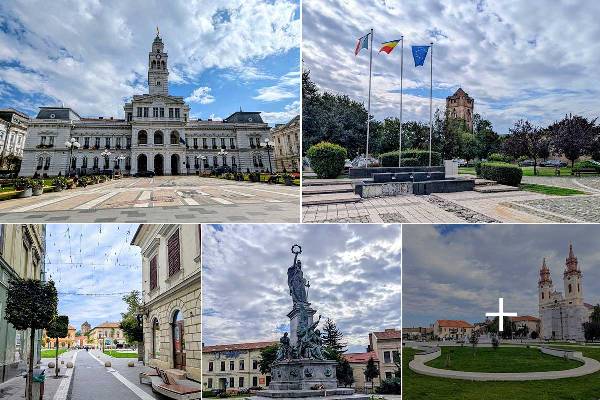
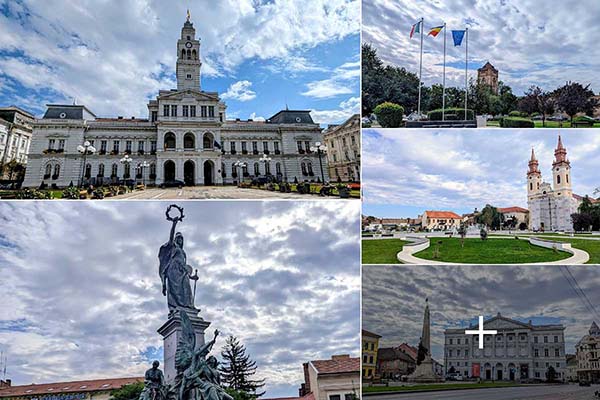
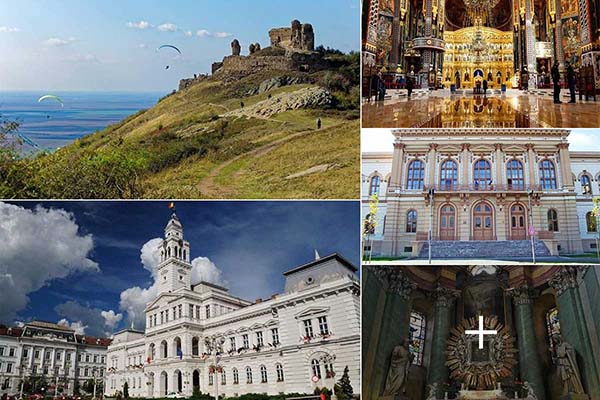
The Administrative Palace in Arad, built between 1872–1876 in Neo-Renaissance style, is one of the most imposing buildings in western Romania. With a central tower 54 meters tall and a spectacular facade, the palace houses Arad City Hall and stands as an architectural symbol of the city on the Mureș River.

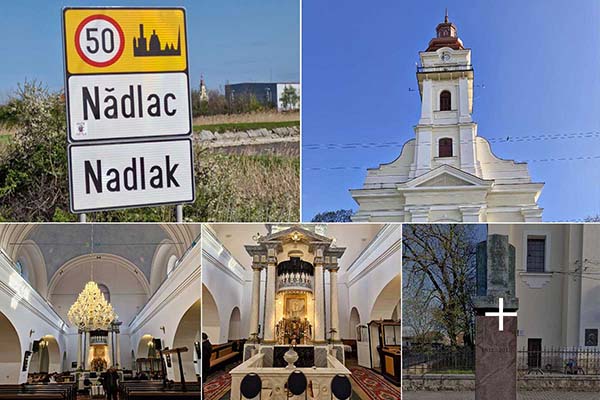
Nadlac | Arad County
[More about] [Map]
Nadlac, in Slovak Nadlak. Border town in Romania, located in Arad County. The largest minority in the town are the Slovaks. The evangelical church is the largest in the area and has a very vibrant community life.

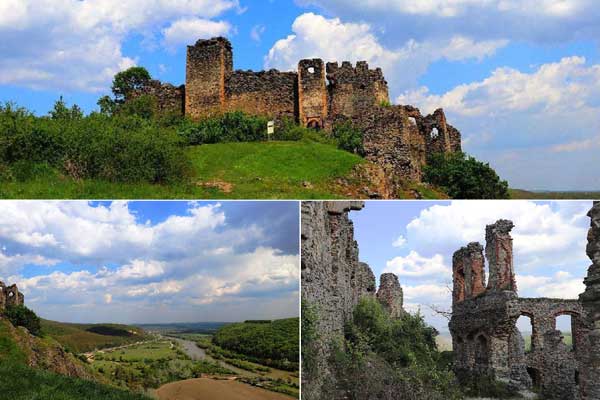
The Fortress of Șoimoș | Lipova | Arad County
[More about] [Map]
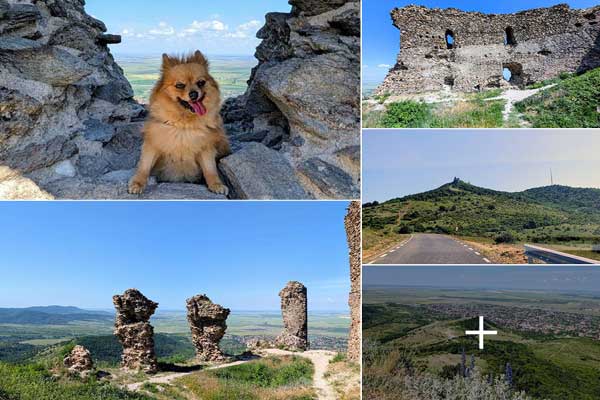
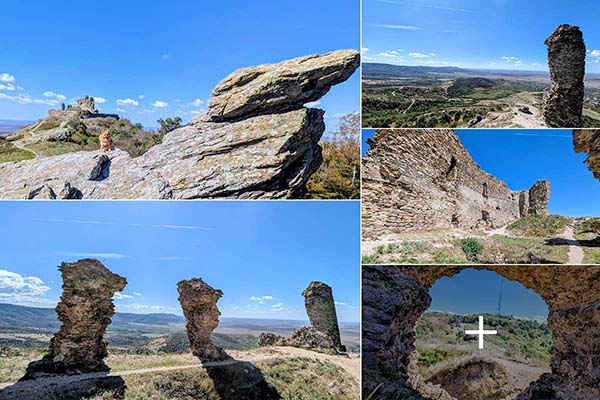
The ruins of the fortress are located on the hill “Cioaca Tăutului”, 2 km northeast of Lipova, at an altitude of 129 meters. The first documentary information about the fortress dates back to 1278. Around 1440-1446, the fortress was rebuilt from scratch by Iancu de Hunedoara. Between 1552 and 1699, the fortress played an important role in the battles to defend the Romanian lands against the Ottoman invaders, being lost and recaptured several times. In 1599-1600, it came under the rule of Mihai Viteazul.

Sria Fortress and Municipality | Arad County
[More about] [Map]
The castle of Şiria is located on a hill 496 meters high, about two kilometers east of the municipality of the same name in the district of Arad. The medieval building was constructed in 1241 and fulfilled an important military and economic function for centuries: from here, vast tracts of land and numerous surrounding villages were controlled.

The Eugen Popa Memorial House | Săvârșin | Arad County
[More about] [Map]
Through a donation made in the spring of 2008 by artist Eugenia Hagiu Popa, the childhood home of painter Eugen Popa (1919–1996) and a significant art collection, supplemented by ethnographic pieces, became public property, with the status of a memorial house and art collection.

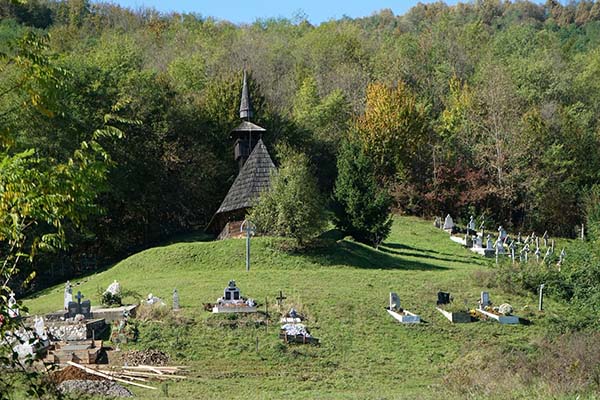
The wooden church | Troaș | Arad County
[More about] [Map]
The consolidation of village life in Troaş took place sometime in the mid-18th century. The place of worship was built by a local craftsman, a woodcarver (according to the inscriptions in the church, his name was Matei), who also served as a priest.

The Royal Domain | Săvârșin | Arad County
[More about] [Map]
The castle is currently owned by the Romanian royal family. The first building was constructed here between 1650 and 1680. It belonged successively to the noble families Nadasdy, Hunyady, and Forray.
At the beginning of the 19th century, the building was renovated in neoclassical style, with an additional floor and a beautiful balcony. Over the years, the castle has undergone multiple interior and exterior transformations.

Orthodox monastery | Moneasa | Arad County
[More about] [Map]
In the heart of the Moneasa resort, situated on a gentle hilltop, lies the Orthodox monastery. In 2009, the foundation stone was laid on the feast day of Saints Peter and Paul, which became the patron saint of the monastic settlement.

Czaran Gyula | Moneasa | Arad County
[More about] [Map]
He was born in the village of Șepreuș in 1847 and was the most prominent pioneer of tourism in the region. He designed and built several of the resort’s alleys. He is buried in Moneasa. In the center of the resort there is a monument erected in his memory.

The Cave at Băi (Bear Cave) | Moneasa | Arad County
[More about] [Map]
The cave at Băi (Bear Cave) is located approximately 500 meters from the center of Moneasa Resort and is open during the summer season. The route is 200 meters long and consists of passing through the access tunnel and the first section of the main gallery of the cave. Visits are made in groups led by guides, equipped with appropriate equipment (helmet with electric lighting system).

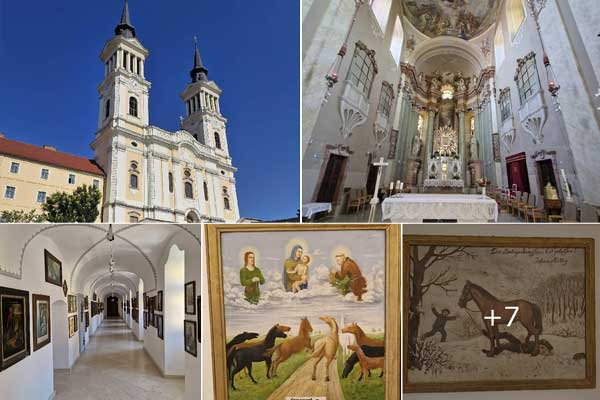
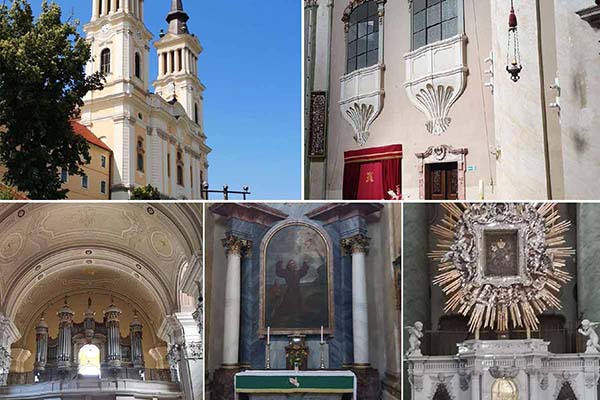
Basilica of Mary | Radna | Arad County
[More about] [Map]
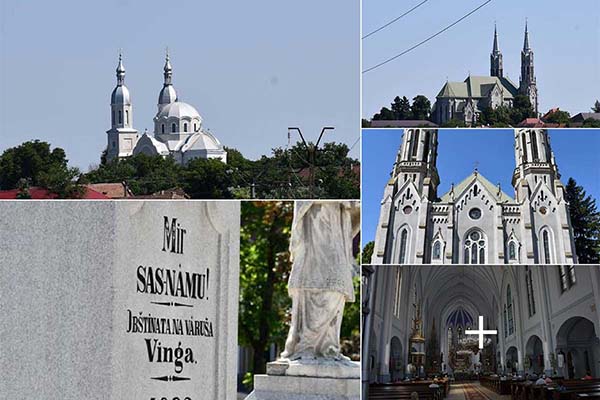
The current church was built in 1723 as the Basilica Maria Radna, and was later expanded with the construction of the monastery in 1727. In 1992, Pope John Paul II conferred the title of Minor Basilica on the pilgrimage church in Maria Radna, one of the most visited tourist attractions in western Romania.

The beach in Moneasa | Arad County
[More about] [Map]
The Moneasa swimming pool is located 400 meters from the resort center. The pool has three pools of different sizes fed with thermal mineral water (average temperature of 26°C).

Moneasa Camp | Arad County
[More about] [Map]
The Moneasa camp has a capacity of 85 beds. The camp has a synthetic turf soccer field, a handball court, and a multipurpose mini-soccer hall.

Belvedere Point | Moneasa | Arad County
[More about] [Map]
The Belvedere Point can be reached by following the Moneasa–iron smelting furnace ruins–red marble quarry tourist trail (marked with red dots) or from the access road to the quarry. From the road to the Belvedere Point, you can reach it by following a path approximately 200 meters long (marked with double white and red circles).

Adventure park | Moneasa | Arad County
[More about] [Map]
The adventure park is open during the summer season, on the road leading to Lake Cu Nuferi and Grota Ursului. The park has four trails, including zip lines and suspended climbing trails, suitable for adults and children.

The Village Museum | Moneasa | Arad County
[More about] [Map]
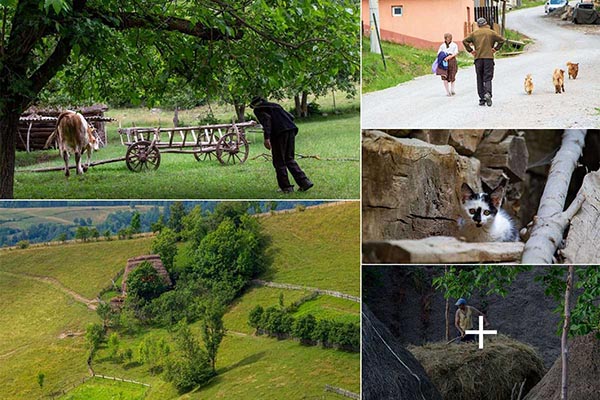
The Village Museum in Moneasa has a collection of old stuff that shows what a traditional household was like: tools, furniture, pots, newspapers, costumes, and more. You can check out the museum if you ask.

Black and red marble quarry | Moneasa | Arad County
[More about] [Map]
The black and red marble quarry is accessible by following a route of approximately 1 km from the Belvedere Point. The marble blocks extracted from this quarry were used to construct buildings in Arad, Budapest, and Vienna.

The lake with thermal water lilies | Moneasa | Arad County
[More about] [Map]
Locals say that no one can pass through the resort without visiting the lake with thermal water lilies, located near the first villa built in the resort in 1891, called “Nufărul” (The Water Lily). The lake with boats is also famous, a small artificial lake where you can go boating or pedal boating.

The iron smelting furnace in Moneasa | Arad County
[More about] [Map]
The iron smelting furnace in Moneasa is built of granite stone with brick lining. This furnace is an important vestige of the intense iron processing activity that took place in the Sebiș-Moneasa area in the 18th and 19th centuries.

Mureș Meadow Nature Park | Arad County
[More about] [Map]
The Lunca Mureșului Natural Park stretches from Arad to the Hungarian border, along the Mureș River. It covers an area of 17,166 ha and includes the embanked area of the Mureș River. A range of specific activities can be enjoyed within the park, such as: cycling, hiking, canoeing, and various sports activities.

The Sculpture Camp | Căsoaia | Arad County
[More about] [Map]
The park is the result of the “National Sculpture Symposium” held between 1979 and 1985, during the summer, in Căsoaia. Each year, 10 artists participated in a series, selected by the Union of Plastic Artists, in collaboration with the organizing institutions in Arad.
The artists were provided with accommodation for the entire period, using part of the local children’s camp’s accommodation capacity.

Lake Ghioroc | Arad County
[More about] [Map]
Lake Ghioroc is located at the foot of the Zărand Mountains, 22 km from the city of Arad. The lake has an area of 66 hectares and a depth of 10 meters. Lake Ghioroc has a sandy beach, palm trees, canopy beach beds, restaurants with terraces, and swan-shaped pedal boats. There is also a campsite with 48 accommodation places for tourists in wooden cabins, as well as a camping area for tents and caravans.

Arad Airport | Arad
[More about] [Map]
The airport offers quick and convenient access to numerous tourist destinations in Romania, making it an ideal starting point for those who want to explore the country’s beauty. Thanks to its modern infrastructure and efficient connections, travelers can easily reach different regions. The airport is therefore the gateway to unique natural landscapes, cities steeped in history, heritage monuments, and a variety of authentic experiences.
Facebook postsView all Facebook posts!